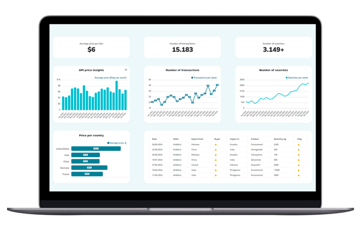
Global API sourcing simplified
We connect API buyers and suppliers worldwide with speed, trust, and full transparency.
teaser-1024x654-1

Flurazepam API Manufacturers & Suppliers

0 verified results
Take control of your API sourcing
Submit a Special Inquiry and have Pharmaoffer activate verified suppliers.
This product is listed at the international narcotic list. The purchase and handling are strictly ruled by national and international laws. Pharmaoffer will validate buyers and suppliers before an order can be settled.

Commercial-scale Suppliers


To view suppliers for this material, you need to be logged in first.


This is because of international laws regarding narcotic materials. Furthermore, the contents of this page are only accessible if you are professionaly active in the pharmaceutical industry. In case you are, it is possible to register on our platform, and after your account is approved by our team you will be able to view suppliers and send your request.


When insight is your advantage
Full data, full access, full negotiation power
Total market transparency Total market transparency
|
Supplier trade data access Supplier trade data access
|
Buyer / supplier flow comparison Buyer / supplier flow comparison
Trusted by 30,000+ registered pharma professionals:
Reach multinationals, SMEs, compounding pharmacies & more!
Procaps
Pfizer
Reckitt
Sanofi
Blau
Abbvie

Flurazepam | CAS No: 17617-23-1 | GMP-certified suppliers

A medication that supports short-term management of recurring insomnia by improving sleep onset and duration, primarily used in central nervous system depressant therapies.

Therapeutic categories

Anti-Anxiety AgentsBenzazepinesBenzodiazepines and benzodiazepine derivativesBenzodiazepinonesCentral Nervous System AgentsCentral Nervous System Depressants
Generic name
Flurazepam
Molecule type
small molecule
CAS number
17617-23-1
DrugBank ID
DB00690
Approval status
Approved drug, Illicit drug, Investigational drug
ATC code
N05CD01

Primary indications

  • For short-term and intermittent use in patients with recurring insomnia and poor sleeping habits

Product Snapshot

  • Flurazepam is available as oral small molecule tablets and capsules
  • It is primarily used for short-term management of insomnia and sleep disturbances
  • The compound is approved for use in the US and Canada markets

Clinical Overview

Flurazepam is a benzodiazepine derivative primarily indicated for short-term and intermittent management of recurring insomnia and poor sleeping habits. As a member of the 1,4-benzodiazepine class, it contains a benzene ring fused to a 1,4-azepine structure.

Pharmacodynamically, flurazepam functions as a hypnotic that facilitates sleep without reducing rapid eye movement (REM) sleep duration. Its clinical effects include a reduction in sleep latency and the frequency of nighttime awakenings, thereby increasing total sleep time.

The mechanism of action involves flurazepam binding allosterically to gamma-aminobutyric acid type A (GABA-A) receptors in the central nervous system. This binding enhances GABA’s inhibitory effect by promoting chloride ion influx through the receptor’s chloride channel, resulting in neuronal hyperpolarization and central nervous system depression.

Flurazepam is metabolized via cytochrome P450 enzymes, including CYP2A6, CYP2E1, and CYP3A4 isoforms. It acts as both a substrate and inhibitor for certain CYP450 enzymes, notably CYP2E1, with implications for drug-drug interactions. The compound is predominantly eliminated through renal excretion. Flurazepam also exhibits inhibitory activity on organic cation transporter 2 (OCT2) and P-glycoprotein, which may influence pharmacokinetics of concomitant medications.

Safety considerations reflect typical benzodiazepine class effects such as sedation, potential for dependence, tolerance development, and withdrawal syndromes following prolonged use. Due to its depressant effects, caution is advised in patients with respiratory insufficiency, impaired hepatic or renal function, and history of substance abuse. Flurazepam is regulated, with approved therapeutic use, but potential for illicit misuse warrants controlled handling.

Notable brand names historically include Dalmane and Doral, used primarily in certain regulatory regions for insomnia management.

For API sourcing, stringent adherence to pharmacopeial standards and thorough impurity profiling is essential due to the compound’s potency and regulatory status. Batch-to-batch consistency in polymorphic form and stability under storage conditions should be verified to ensure efficacy and safety profiles align with clinical requirements.

Identification & chemistry

Generic name Flurazepam
Molecule type Small molecule
CAS 17617-23-1
UNII IHP475989U
DrugBank ID DB00690

Pharmacology

SummaryFlurazepam is a benzodiazepine that acts as a positive allosteric modulator of GABA-A receptors by binding to the benzodiazepine site, enhancing GABA-induced chloride ion influx and neuronal hyperpolarization. It is utilized for its hypnotic properties to facilitate sleep initiation and maintenance without reducing REM sleep. The compound targets GABA-A receptor complexes to modulate inhibitory neurotransmission in patients with insomnia.
Mechanism of actionFlurazepam binds to an allosteric site on GABA-A receptors. Binding potentiates the action of GABA on GABA-A receptors by opening the chloride channel within the receptor, causing chloride influx and hyperpolarization.
PharmacodynamicsFlurazepam, a benzodiazepine derivative, is a hypnotic agent which does not appear to decrease dream time as measured by rapid eye movements (REM). Furthermore, it decreases sleep latency and number of awakenings for a consequent increase in total sleep time.
Targets
TargetOrganismActions
GABA(A) ReceptorHumanspositive allosteric modulator
GABA(A) Receptor Benzodiazepine Binding SiteHumansligand

ADME / PK

AbsorptionFlurazepam hydrochloride is rapidly (30 minutes) absorbed from the gastrointestinal tract
Half-lifeThe mean apparent half-life of flurazepam is 2.3 hours. The half life of elimination of N1-des-alkyl- flurazepam ranged from 47 to 100 hours
Protein binding83%
MetabolismFlurazepam is rapidly metabolized and is excreted primarily in the urine. Both hydroxyethyl flurazepam (the major metabolite) and N-desalkyl flurazepam are active. The N-desalkyl metabolite is slowly excreted in the urine as the conjugated form
Route of eliminationFlurazepam is rapidly metabolized and is excreted primarily in the urine. Less than 1% of the dose is excreted in the urine as N1-desalkyl-flurazepam.

Formulation & handling

  • Flurazepam is a small molecule benzodiazepine primarily formulated for oral administration as tablets or capsules.
  • It has low water solubility and moderate lipophilicity (LogP 3.95), which should be considered in formulation design.
  • Absorption is unaffected by food intake, but concomitant use with alcohol should be avoided due to potential interactions.

Regulatory status

LifecycleThe active pharmaceutical ingredient (API) has reached patent expiry in both the US and Canada, allowing for generic entry and increased market competition. As a result, the product is in a mature market phase in these regions.
MarketsCanada, US
Supply Chain
Supply chain summaryThe manufacturing landscape for flurazepam includes numerous companies, with several originators and generic manufacturers involved in production and packaging, indicating multiple sources of supply. Branded products such as Dalmane maintain presence primarily in the US and Canada markets. Given the widespread manufacturing list and availability of generics, patent expiry has allowed for established generic competition in these regions.

Safety

ToxicityComa, confusion, low blood pressure, sleepiness
High Level Warnings:
  • May cause central nervous system depression manifesting as coma, confusion, or sleepiness
  • Potential to induce hypotension
  • Monitor handling environment accordingly

Flurazepam is a type of Benzodiazepines


Benzodiazepines are a class of pharmaceutical APIs (active pharmaceutical ingredients) widely used in the treatment of various medical conditions. These compounds belong to the family of psychoactive drugs and are primarily known for their anxiolytic (anti-anxiety), sedative, hypnotic, and muscle relaxant properties.

Benzodiazepines work by enhancing the activity of gamma-aminobutyric acid (GABA), a neurotransmitter in the brain that helps regulate neuronal excitability. By increasing the effects of GABA, benzodiazepines promote relaxation, reduce anxiety, and induce sleep. Due to their effectiveness, benzodiazepines have become a key therapeutic option for treating anxiety disorders, panic attacks, insomnia, seizures, and muscle spasms.

The pharmaceutical industry offers a wide range of benzodiazepine APIs, including well-known compounds like diazepam, lorazepam, alprazolam, and clonazepam. These APIs are typically synthesized through complex chemical processes and must adhere to stringent quality standards to ensure their purity, potency, and safety.

Benzodiazepines are commonly formulated into oral tablets, capsules, or liquids for easy administration. They are available under various brand names and may require a prescription due to their potential for misuse and dependence. The dosage and duration of benzodiazepine treatment should be carefully determined by healthcare professionals to minimize the risk of adverse effects.

It is important to note that benzodiazepines may cause side effects such as drowsiness, dizziness, impaired coordination, and memory problems. Long-term use or sudden discontinuation of benzodiazepines can lead to withdrawal symptoms and should be managed under medical supervision.

In summary, benzodiazepines are a crucial category of pharmaceutical APIs used to alleviate anxiety, induce sleep, and relax muscles. They play a significant role in the treatment of various medical conditions, but their usage requires careful monitoring and adherence to medical guidelines to ensure safe and effective outcomes for patients.