Global API sourcing simplified
We connect API buyers and suppliers worldwide with speed, trust, and full transparency.

Filters

Filters
Filter
Custom request?
Type
Production region
Qualifications
Show more
Country of origin
Show more

Sodium bicarbonate API API Manufacturers & Suppliers

11 verified results
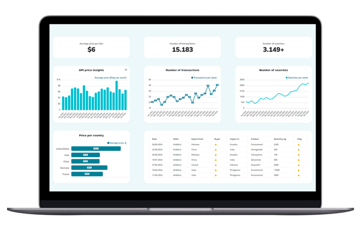
When insight is your advantage
Full data, full access, full negotiation power
Total market transparency Total market transparency
|
Supplier trade data access Supplier trade data access
|
Buyer / supplier flow comparison Buyer / supplier flow comparison

Commercial-scale Suppliers

Distributor
Produced in  Unknown
|

Employees: 50+

|
Audit Report: Currently Eurofins has no report for this supplier. Contact them to let them know you're interested!
Certifications: GMP
|
USDMF
|
MSDS
|
BSE/TSE
|
CoA

All certificates

GMP
USDMF
MSDS
BSE/TSE
CoA
Producer
Produced in  Japan
|

Employees: 2400+

|
Audit Report: Currently Eurofins has no report for this supplier. Contact them to let them know you're interested!
Certifications: GMP
|
MSDS
|
BSE/TSE
|
ISO9001
|
CoA

All certificates

GMP
MSDS
BSE/TSE
ISO9001
CoA
Take control of your API sourcing
Submit a Special Inquiry and have Pharmaoffer activate verified suppliers.
Distributor
Produced in  Unknown
|

Employees: 275+

|
Audit Report: Currently Eurofins has no report for this supplier. Contact them to let them know you're interested!
Certifications: GMP
|
MSDS
|
BSE/TSE
|
ISO9001
|
CoA

All certificates

GMP
MSDS
BSE/TSE
ISO9001
CoA
Distributor
Produced in  Switzerland
|

Employees: 135+

|
Audit Report: Currently Eurofins has no report for this supplier. Contact them to let them know you're interested!
Certifications: GMP
|
MSDS
|
CoA

All certificates

GMP
MSDS
CoA
Distributor
Produced in  India
|

Employees: 25

|
Audit Report: Currently Eurofins has no report for this supplier. Contact them to let them know you're interested!
Certifications: GMP
|
FDA
|
MSDS
|
BSE/TSE
|
ISO9001

All certificates

GMP
FDA
MSDS
BSE/TSE
ISO9001
CoA
Distributor
Produced in  Unknown
|

Employees: 50+

|
Audit Report: Currently Eurofins has no report for this supplier. Contact them to let them know you're interested!
Certifications: GMP
|
MSDS
|
ISO9001
|
CoA

All certificates

GMP
MSDS
ISO9001
CoA
Get full market intelligence report
€399,-
All Sodium bicarbonate API data. Full access. Full negotiation power
Producer
Produced in  Netherlands
|
Audit Report: Currently Eurofins has no report for this supplier. Contact them to let them know you're interested!
Certifications: GMP
|
MSDS
|
BSE/TSE
|
CoA

All certificates

GMP
MSDS
BSE/TSE
CoA
Producer
Produced in  Spain
|
Audit Report: Currently Eurofins has no report for this supplier. Contact them to let them know you're interested!
Certifications: GMP
|
CEP
|
coa

All certificates

GMP
CEP
coa
Get full market intelligence report
€399,-
All Sodium bicarbonate API data. Full access. Full negotiation power
Producer
Produced in  France
|
Audit Report: Currently Eurofins has no report for this supplier. Contact them to let them know you're interested!
Certifications: GMP
|
CEP
|
coa

All certificates

GMP
CEP
coa
Producer
Produced in  Italy
|
Audit Report: Click here for more information on Eurofins audit reports
Certifications: USDMF
|
CoA

All certificates

USDMF
CoA
Producer
Produced in  India
|
Audit Report: Currently Eurofins has no report for this supplier. Contact them to let them know you're interested!
Certifications: USDMF
|
CoA

All certificates

USDMF
CoA
When insight is your advantage
Full data, full access, full negotiation power
Total market transparency Total market transparency
|
Supplier trade data access Supplier trade data access
|
Buyer / supplier flow comparison Buyer / supplier flow comparison
Trusted by 30,000+ registered pharma professionals:
Reach multinationals, SMEs, compounding pharmacies & more!
Procaps
Pfizer
Reckitt
Sanofi
Blau
Abbvie

Sodium bicarbonate | CAS No: 144-55-8 | GMP-certified suppliers

A medication that supports correction of metabolic acidosis from renal impairment, diabetes or shock and aids bicarbonate loss or selected intoxications requiring urinary alkalinization.

Therapeutic categories

AntacidsAntacids and AdsorbentsBicarbonatesBlood and Blood Forming OrgansBlood Substitutes and Perfusion SolutionsCarbon Compounds, Inorganic
Generic name
Sodium bicarbonate
Molecule type
small molecule
CAS number
144-55-8
DrugBank ID
DB01390
Approval status
Approved drug
ATC code
B05CB04

Primary indications

  • Sodium bicarbonate is used for the treatment of metabolic acidosis which may occur in severe renal disease, uncontrolled diabetes, circulatory insufficiency due to shock or severe dehydration, extracorporeal circulation of blood, cardiac arrest and severe primary lactic acidosis
  • Also is indicated in severe diarrhea which is often accompanied by a significant loss of bicarbonate
  • Further indicated in the treatment of certain drug intoxications, including barbiturates (where dissociation of the barbiturateprotein complex is desired), in poisoning by salicylates or methyl alcohol and in hemolytic reactions requiring alkalinization of the urine to diminish nephrotoxicity of blood pigments

Product Snapshot

  • Sodium bicarbonate is an inorganic small-molecule electrolyte available in multiple formulations, predominantly injectable and oral solutions or powders
  • It is used for correction of metabolic acidosis and for urine alkalinization in various intoxications and renal or circulatory conditions
  • It is approved and marketed in the US and Canada

Clinical Overview

Sodium bicarbonate (CAS 144-55-8) is an inorganic carbonate salt supplied as a white crystalline powder and widely applied as a systemic alkalizing agent, antacid, and pH buffer. It is classified among organic carbonic acids due to the presence of the carbonic acid functional group.

Clinically, sodium bicarbonate is indicated for metabolic acidosis associated with severe renal impairment, uncontrolled diabetes, circulatory insufficiency from shock or profound dehydration, cardiac arrest, and primary lactic acidosis. It is also used during extracorporeal circulation procedures. Additional indications include correction of bicarbonate loss in severe diarrhea and management of selected intoxications, such as barbiturate, salicylate, and methanol poisoning, where urinary alkalinization supports toxin elimination. In hemolytic reactions, urine alkalinization may reduce nephrotoxicity from blood pigments.

Pharmacologically, intravenous administration increases plasma bicarbonate concentration, buffering hydrogen ions and elevating blood pH. This correction of extracellular acidity reverses key manifestations of metabolic acidosis. As a urinary alkalizer, the compound increases renal excretion of bicarbonate and raises urinary pH, which can assist dissolution of uric acid calculi. In the gastrointestinal tract, sodium bicarbonate acts as a fast-acting antacid through direct chemical neutralization of gastric acid without reducing acid secretion.

Absorption of sodium bicarbonate is rapid following oral administration, with distribution throughout extracellular fluid. Carbon dioxide generated during buffering is exhaled, and excess bicarbonate is excreted renally. Pharmacokinetics are influenced by renal function and acid-base status.

Safety considerations include the risk of volume overload, hypernatremia, metabolic alkalosis, and increased CO2 generation, particularly in patients with impaired ventilation or compromised renal function. Rapid intravenous administration warrants careful monitoring of serum electrolytes and pH.

Sodium bicarbonate is available globally in antacid formulations, parenteral solutions, hemodialysis preparations, and irrigation solutions.

For API procurement, suppliers should provide material meeting pharmacopeial specifications with controlled particle size, verified sodium content, and low impurity profiles, supported by GMP-compliant documentation and stability data.

Identification & chemistry

Generic name Sodium bicarbonate
Molecule type Small molecule
CAS 144-55-8
UNII 8MDF5V39QO
DrugBank ID DB01390

Pharmacology

SummarySodium bicarbonate functions as a systemic and urinary alkalizer by increasing plasma and urinary bicarbonate levels, buffering excess hydrogen ions, and raising pH. These actions counter metabolic acidosis and support urinary alkalinization, which can aid dissolution of uric acid stones and enhance elimination of certain toxins. It also neutralizes gastric acid through direct chemical buffering.
Mechanism of actionSodium bicarbonate is a systemic alkalizer, which increases plasma bicarbonate, buffers excess hydrogen ion concentration, and raises blood pH, thereby reversing the clinical manifestations of acidosis. It is also a urinary alkalizer, increasing the excretion of free bicarbonate ions in the urine, thus effectively raising the urinary pH. By maintaining an alkaline urine, the actual dissolution of uric acid stones may be accomplished. Sodium bicarbonate acts as an antacid and reacts chemically to neutralize or buffer existing quantities of stomach acid but has no direct effect on its output. This action results in increased pH value of stomach contents, thus providing relief of hyperacidity symptoms. [PharmGKB]
PharmacodynamicsIntravenous sodium bicarbonate therapy increases plasma bicarbonate, buffers excess hydrogen ion concentration, raises blood pH and reverses the clinical manifestations of acidosis.
Targets
TargetOrganismActions
Hydrogen ionsneutralizer

Formulation & handling

  • Highly water‑soluble small‑molecule buffer salt suitable for rapid dissolution in oral, parenteral, dialysis, and extracorporeal formulations.
  • Parenteral and dialysis solutions require careful control of concentration, pH, and CO₂ loss, as bicarbonate readily equilibrates with carbonic acid and can shift pH on exposure to air.
  • Oral products are typically simple aqueous or effervescent systems with minimal food‑related constraints, though moisture protection is needed due to hygroscopicity and CO₂‑releasing reactions with acids.

Regulatory status

LifecycleThe API’s core U.S. patents expired in 2016, indicating that it is well into a post‑exclusivity phase. With products marketed in the United States and Canada, the molecule is considered commercially mature with established generic availability.
MarketsUS, Canada
Supply Chain
Supply chain summarySodium bicarbonate is supplied by numerous manufacturers and repackagers, with no single dominant originator, reflecting its long-standing use as a basic pharmaceutical and medical commodity. Branded and unbranded presentations are available primarily in the US and Canada, with multiple formulations indicating broad market penetration. All listed US patents expired in 2016, consistent with an established landscape of generic production and distribution.

Sodium bicarbonate API is a type of Alkalinizing agents


Alkalinizing agents, a pharmaceutical API category, refers to a group of substances used to increase the pH (alkalinity) of a solution or body fluid. These agents play a crucial role in various medical applications, such as the treatment of acidosis, kidney disorders, and certain drug overdoses.

One commonly used alkalinizing agent is sodium bicarbonate, which is highly effective in raising the pH of blood and urine. It works by neutralizing excess acid and restoring the acid-base balance in the body. Sodium bicarbonate is often administered intravenously in emergency situations to rapidly correct severe acidosis.

Another alkalinizing agent, acetazolamide, is frequently employed in the treatment of glaucoma and certain types of epilepsy. By inhibiting carbonic anhydrase, acetazolamide reduces the production of bicarbonate ions, leading to a systemic decrease in pH. This mechanism is particularly useful in lowering the intraocular pressure associated with glaucoma.

Alkalinizing agents are also utilized in the management of certain drug toxicities. For instance, methotrexate, a chemotherapy medication, can cause severe toxicity if its elimination is hindered. Alkalinizing the urine with agents like sodium bicarbonate enhances methotrexate solubility, preventing the formation of toxic crystals in the kidneys.

In conclusion, alkalinizing agents are indispensable pharmaceutical APIs that help correct acid-base imbalances, treat specific medical conditions, and mitigate drug toxicities. Their diverse applications make them valuable tools in modern medicine.

Sodium bicarbonate API API manufacturers & distributors

Compare qualified Sodium bicarbonate API API suppliers worldwide. We currently have 11 companies offering Sodium bicarbonate API API, with manufacturing taking place in 8 different countries. Use the table below to review supplier type, countries of origin, certifications, product portfolio and GMP audit availability.

SupplierTypeCountryProduct originCertificationsPortfolio
Producer
Italy Italy CoA, USDMF36 products
Producer
Netherlands Netherlands BSE/TSE, CoA, GMP, MSDS67 products
Distributor
Germany Unknown BSE/TSE, CoA, GMP, ISO9001, MSDS211 products
Distributor
Netherlands Unknown CoA, GMP, ISO9001, MSDS170 products
Producer
India India CoA, USDMF3 products
Producer
Japan Japan BSE/TSE, CoA, GMP, ISO9001, MSDS55 products
Distributor
India India BSE/TSE, CoA, FDA, GMP, ISO9001, MSDS484 products
Distributor
Switzerland Switzerland CoA, GMP, MSDS174 products
Distributor
United States Unknown BSE/TSE, CoA, GMP, MSDS, USDMF166 products
Producer
France France CEP, CoA, GMP2 products
Producer
Spain Spain CEP, CoA, GMP1 products

When sending a request, specify which Sodium bicarbonate API API quality you need: for example EP (Ph. Eur.), USP, JP, BP, or another pharmacopoeial standard, as well as the required grade (base, salt, micronised, specific purity, etc.).

Use the list above to find high-quality Sodium bicarbonate API API suppliers. For example, you can select GMP, FDA or ISO certified suppliers. Visit our help page to learn more about sourcing APIs via Pharmaoffer.

Frequently asked questions about Sodium bicarbonate API API


Sourcing

What matters most when sourcing GMP-grade Sodium bicarbonate API?
Key considerations include confirming GMP compliance and meeting relevant US and Canadian regulatory requirements for pharmaceutical use. Given the large number of manufacturers and repackagers, verifying consistent quality specifications, documentation, and traceability is essential. It is also important to ensure the chosen supplier maintains reliable supply controls in a mature, fully generic market.
Which documents are typically required when sourcing Sodium bicarbonate API?
Request the core API documentation set: CoA (11 companies), GMP (9 companies), MSDS (7 companies), BSE/TSE (5 companies), ISO9001 (4 companies). Confirm versions and validity dates match the destination market to avoid delays in qualification.
Which manufacturers are known to produce Sodium bicarbonate API?
Known or reported manufacturers for Sodium bicarbonate API: Duchefa Farma B.V., Caesar & Loretz GmbH (CAELO), Fujifilm Wako Pure Chemical Corporation, Hänseler AG, Global Pharma Tek, Pharm Rx Chemical Corp, Acta minerals. Evaluate their GMP history, scale, and regional coverage before requesting dossiers or allocating demand.
How can I request quotes for Sodium bicarbonate API from GMP suppliers?
Submit quote requests through the supplier listings with your specs and required documents (specifications, target volume, delivery timeline, and destination). Providing consistent details upfront speeds comparable offers and clarifies technical feasibility.
Is a GMP audit report available for Sodium bicarbonate API manufacturers?
Audit reports may be requested for Sodium bicarbonate API: 1 GMP audit report available. Confirm the scope and recency of any audit before relying on it for qualification decisions.
How many suppliers offer Sodium bicarbonate API on Pharmaoffer?
Reported supplier count for Sodium bicarbonate API: 11 verified suppliers. Filter listings by certifications, regions, and delivery options to match your qualification plan.
Which countries are known to manufacture Sodium bicarbonate API?
Production countries reported for Sodium bicarbonate API: India (2 producers), Japan (1 producer), Switzerland (1 producer). Knowing the manufacturing geography helps anticipate logistics lead times and import compliance needs.
Which certifications do suppliers of Sodium bicarbonate API usually hold?
Common certifications for Sodium bicarbonate API suppliers: CoA (11 companies), GMP (9 companies), MSDS (7 companies), BSE/TSE (5 companies), ISO9001 (4 companies). Always verify issuing authorities and expiry dates when reviewing audit packages.

Technical

What is Sodium bicarbonate API (CAS 144-55-8) used for?
Sodium bicarbonate API is used as a systemic alkalizing agent to correct metabolic acidosis in conditions such as renal impairment, uncontrolled diabetes, circulatory insufficiency, cardiac arrest, and primary lactic acidosis. It supports urinary alkalinization in specific intoxications and can aid dissolution of uric acid stones. It also functions as a fast‑acting antacid by neutralizing gastric acid.
Which therapeutic class does Sodium bicarbonate API fall into?
Sodium bicarbonate API belongs to the following therapeutic categories: Antacids, Antacids and Adsorbents, Bicarbonates, Blood and Blood Forming Organs, Blood Substitutes and Perfusion Solutions. This positioning helps teams compare alternative APIs, anticipate pharmacology expectations, and align early research priorities.
What conditions is Sodium bicarbonate API mainly prescribed for?
The primary indications for Sodium bicarbonate API: Sodium bicarbonate API is used for the treatment of metabolic acidosis which may occur in severe renal disease, uncontrolled diabetes, circulatory insufficiency due to shock or severe dehydration, extracorporeal circulation of blood, cardiac arrest and severe primary lactic acidosis, Also is indicated in severe diarrhea which is often accompanied by a significant loss of bicarbonate, Further indicated in the treatment of certain drug intoxications, including barbiturates (where dissociation of the barbiturateprotein complex is desired), in poisoning by salicylates or methyl alcohol and in hemolytic reactions requiring alkalinization of the urine to diminish nephrotoxicity of blood pigments. These use cases frame the target patient populations and help prioritize formulation and safety evaluations.
How does Sodium bicarbonate API work?
Sodium bicarbonate API is a systemic alkalizer, which increases plasma bicarbonate, buffers excess hydrogen ion concentration, and raises blood pH, thereby reversing the clinical manifestations of acidosis. It is also a urinary alkalizer, increasing the excretion of free bicarbonate ions in the urine, thus effectively raising the urinary pH. By maintaining an alkaline urine, the actual dissolution of uric acid stones may be accomplished. Sodium bicarbonate API acts as an antacid and reacts chemically to neutralize or buffer existing quantities of stomach acid but has no direct effect on its output. This action results in increased pH value of stomach contents, thus providing relief of hyperacidity symptoms. [PharmGKB]
What should someone know about the safety or toxicity profile of Sodium bicarbonate API?
Sodium bicarbonate API can cause metabolic alkalosis, hypernatremia, and fluid overload, with higher risk in patients who have renal impairment or limited ventilatory capacity. Rapid intravenous use requires monitoring of serum electrolytes, acid–base status, and volume balance. Increased carbon dioxide generation may worsen respiratory insufficiency in susceptible patients.
What are important formulation and handling considerations for Sodium bicarbonate API as an API?
Sodium bicarbonate API’s high water solubility supports simple aqueous oral, parenteral, and dialysis formulations, but its hygroscopicity requires protection from moisture. In parenteral and dialysis solutions, concentration, pH, and CO₂ loss must be tightly controlled because bicarbonate equilibrates with carbonic acid and can shift pH when exposed to air. Oral formulations are typically straightforward solutions or effervescent systems, with attention to preventing premature CO₂‑releasing reactions with acids.
Is Sodium bicarbonate API a small molecule?
Sodium bicarbonate API is classified as a small molecule. That classification shapes process design, impurity profiling, and analytical control strategies.
Are there special stability concerns for oral Sodium bicarbonate API?
Oral Sodium bicarbonate API is hygroscopic, so formulations require protection from moisture to prevent caking and loss of potency. Contact with acids can trigger premature CO₂ release, affecting product integrity and container pressure. Aqueous and effervescent oral systems are generally stable when moisture exposure is controlled.

Regulatory

Where is Sodium bicarbonate API approved or in use globally?
Sodium bicarbonate API is reported as approved in the following major regions: US, Canada. Understanding geographic coverage informs regulatory filings, supply planning, and risk assessments before escalating procurement.
What’s the regulatory and patent landscape for Sodium bicarbonate API right now?
In the United States and Canada, Sodium bicarbonate API is an established ingredient with recognized regulatory status for pharmaceutical use. As a long‑standing chemical entity, it is not generally subject to patent exclusivity, and its manufacture and use occur in a non‑proprietary framework.

Pharmaoffer

How does Pharmaoffer’s Smart Sourcing Service help with Sodium bicarbonate API procurement?
Pharmaoffer's Smart Sourcing Service coordinates compliant suppliers, documentation, and competitive quotes for Sodium bicarbonate API. It centralizes outreach, follow-ups, and document validation to shorten procurement timelines.
Is Sodium bicarbonate API included in the PRO Data Insights coverage?
PRO Data Insights coverage for Sodium bicarbonate API: . Use the dataset to benchmark suppliers and monitor regulatory activity where available.
Where can I access the API market report for Sodium bicarbonate API?
Market report availability for Sodium bicarbonate API: Report Available. The report highlights demand trends, pricing drivers, and supplier landscape insights for procurement planning.