
Nitrofural API Manufacturers & Suppliers

Find, compare & contact
Filters
Custom request?
Type
Production region
Qualifications
Country of origin

Distributor
Produced in:

Established in: 2011
MOQ: -
Employees: 50+



Comprehensive Product Portfolio with Competitive Pricing.
Focus on Quality and Regulatory Compliance, One-stop, Responsive, End-to-End Service from R&D Through Commercialization.
Expertise and Reliability in Pharmaceutical Material Supply, Backed by a Singaporean Presence.
+ 0
All certificates

Producer
Produced in:

Established in: 1970
MOQ: -
Employees: 80+

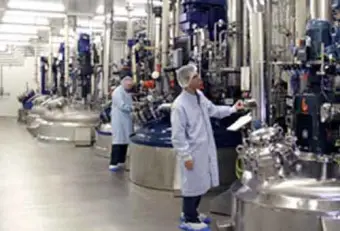
2 Spanish GMP-certified plants
Over 400m³ reactor vessel capacity
Highly professional & care for ethical values
+ 0
All certificates
+ 0
All certificates
How does it work?

You can register for free as long as you are registering on behalf of a legal company related to the pharmaceutical industry

Search in the search bar the product that you’re looking for. We’ll show you an overview of all available suppliers. Use the filters to select the relevant suppliers only

Have you found interesting suppliers? Then it’s time to contact them. Use the send inquiry button and send them a message. You can send for each product, 3 inquiries per week

Suppliers get notified by Pharmaoffer that they’ve received a new inquiry. They will come back to you with their questions, certificates, and offer in the chat on Pharmaoffer. We will send you an email in case of any news

Does the supplier meet your quality and commercial requirements? Then you can place the order. Just follow the steps of our order module
Looking for Nitrofural API 59-87-0?
- Description:
- Here you will find a list of producers, manufacturers and distributors of Nitrofural. You can filter on certificates such as GMP, FDA, CEP, Written Confirmation and more. Send inquiries for free and get in direct contact with the supplier of your choice.
- API | Excipient name:
- Nitrofural
- Synonyms:
- Furacilin , Furacin , Nitrofural , Nitrofurazone
- Cas Number:
- 59-87-0
- DrugBank number:
- DB00336
- Unique Ingredient Identifier:
- X8XI70B5Z6
About Nitrofural
What can you use it for? A topical anti-infective agent effective against gram-negative and gram-positive bacteria. It is used for superficial wounds, burns, ulcers, and skin infections. Nitrofurazone has also been administered orally in the treatment of trypanosomiasis.
You can ask the supplier about all relevant certificates for the product such as CoA, Safety Data Sheet and DMF.
Nitrofural is a type of Antibacterials
Antibacterials, a category of pharmaceutical active pharmaceutical ingredients (APIs), play a crucial role in combating bacterial infections. These APIs are chemical compounds that target and inhibit the growth or kill bacteria, helping to eliminate harmful bacterial pathogens from the body.
Antibacterials are essential for the treatment of various bacterial infections, including respiratory tract infections, urinary tract infections, skin and soft tissue infections, and more. They are commonly prescribed by healthcare professionals to combat both mild and severe bacterial infections.
Within the category of antibacterials, there are different classes and subclasses of APIs, each with distinct mechanisms of action and target bacteria. Some commonly used antibacterials include penicillins, cephalosporins, tetracyclines, macrolides, and fluoroquinolones. These APIs work by interfering with various aspects of bacterial cellular processes, such as cell wall synthesis, protein synthesis, DNA replication, or enzyme activity.
The development and production of antibacterial APIs require stringent quality control measures to ensure their safety, efficacy, and purity. Pharmaceutical manufacturers must adhere to Good Manufacturing Practices (GMP) and follow rigorous testing protocols to guarantee the quality and consistency of these APIs.
As bacterial resistance to antibiotics continues to be a significant concern, ongoing research and development efforts aim to discover and develop new antibacterial APIs. The evolution of antibacterials plays a crucial role in combating emerging bacterial strains and ensuring effective treatment options for infectious diseases.
In summary, antibacterials are a vital category of pharmaceutical APIs used to treat bacterial infections. They are designed to inhibit or kill bacteria, and their development requires strict adherence to quality control standards. By continually advancing research in this field, scientists and pharmaceutical companies can contribute to the ongoing battle against bacterial infections.
Nitrofural manufacturers | traders | suppliers
We have 3 companies offering Nitrofural produced in 0 different countries.
Get in contact with the supplier of your choice:
- Apollo Healthcare Resources (Singapore) from Singapore, product country of origin Singapore
- Menadiona, S.L. from Spain, product country of origin Spain
- Shandong Fangxing Technology Development Co Ltd from China, product country of origin China
Let the supplier know whether you are looking for a product with a specific monograph such as EP (Ph. Eur.), USP, JP, BP or another quality. Or, whether you are looking for hydrochloride (HCl), anhydricum, base, micronisatum or a specific purity.
You can use the filters to find high-quality suppliers. For example, you can select GMP, FDA or ISO certified suppliers. Visit our FAQ page or use the chat box in the corner to get more information about Pharmaoffer.
