Global API sourcing simplified
We connect API buyers and suppliers worldwide with speed, trust, and full transparency.

Filters

Filters
Filter
Custom request?
Type
Production region
Qualifications
Show more
Country of origin
Show more

Cbz (Carbamazepine) API Manufacturers & Suppliers

13 verified results
Get full market intelligence report
Full access. Full negotiation power All Carbamazepine data. Full access. Full negotiation power

Commercial-scale Suppliers

Producer
Produced in  Poland
|

Employees: 455+

|
Audit Report: Click here for more information on Eurofins audit reports
Certifications: GMP
|
FDA
|
CEP
|
EDMF/ASMF
|
MSDS

All certificates

GMP
FDA
CEP
EDMF/ASMF
MSDS
BSE/TSE
JDMF
KDMF
CoA
Producer
Produced in  India
|

Employees: 10k+

|
Audit Report: Currently Eurofins has no report for this supplier. Contact them to let them know you're interested!
Certifications: GMP
|
CEP
|
USDMF
|
MSDS
|
BSE/TSE

All certificates

GMP
CEP
USDMF
MSDS
BSE/TSE
ISO9001
JDMF
CoA
Take control of your API sourcing
Submit a Special Inquiry and have Pharmaoffer activate verified suppliers.
Distributor
Produced in  Singapore
|

Employees: 50+

|
Audit Report: Currently Eurofins has no report for this supplier. Contact them to let them know you're interested!
Certifications: GMP
|
FDA
|
CEP
|
USDMF
|
EDMF/ASMF

All certificates

GMP
FDA
CEP
USDMF
EDMF/ASMF
MSDS
BSE/TSE
ISO9001
JDMF
WC
KDMF
CoA
Distributor
Produced in  China
|

Employees: 50+

|
Audit Report: Currently Eurofins has no report for this supplier. Contact them to let them know you're interested!
Certifications: CoA

All certificates

CoA
Distributor
Produced in  European Union
|

Employees: 50

|
Audit Report: Currently Eurofins has no report for this supplier. Contact them to let them know you're interested!
Certifications: GMP
|
CEP
|
USDMF
|
MSDS
|
ISO9001

All certificates

GMP
CEP
USDMF
MSDS
ISO9001
CoA
Distributor
Produced in  World
|

Employees: 200+

|
Audit Report: Currently Eurofins has no report for this supplier. Contact them to let them know you're interested!
Certifications: GMP
|
CEP
|
USDMF
|
MSDS
|
BSE/TSE

All certificates

GMP
CEP
USDMF
MSDS
BSE/TSE
CoA
Get full market intelligence report
€399,-
All Carbamazepine data. Full access. Full negotiation power
Distributor
Produced in  China
|

Employees: 200+

|
Audit Report: Currently Eurofins has no report for this supplier. Contact them to let them know you're interested!
Certifications: GMP
|
FDA
|
CEP
|
USDMF
|
EDMF/ASMF

All certificates

GMP
FDA
CEP
USDMF
EDMF/ASMF
MSDS
BSE/TSE
ISO9001
CoA
WC
GDP
WHO-GMP
JDMF
KDMF
Producer
Produced in  India
|
Audit Report: Currently Eurofins has no report for this supplier. Contact them to let them know you're interested!
Certifications: GMP
|
WC
|
CoA

All certificates

GMP
WC
CoA
Take control of your API sourcing
Submit a Special Inquiry and have Pharmaoffer activate verified suppliers.
Producer
Produced in  Unknown
|
Audit Report: Click here for more information on Eurofins audit reports
Certifications: FDA
|
CEP
|
coa

All certificates

FDA
CEP
coa
Producer
Produced in  Japan
|
Audit Report: Currently Eurofins has no report for this supplier. Contact them to let them know you're interested!
Certifications: JDMF
|
CoA

All certificates

JDMF
CoA
Producer
Produced in  China
|
Audit Report: Currently Eurofins has no report for this supplier. Contact them to let them know you're interested!
Certifications: USDMF
|
JDMF
|
CoA

All certificates

USDMF
JDMF
CoA
Producer
Produced in  Japan
|
Audit Report: Click here for more information on Eurofins audit reports
Certifications: JDMF
|
CoA

All certificates

JDMF
CoA
Take control of your API sourcing
Submit a Special Inquiry and have Pharmaoffer activate verified suppliers.
Distributor
Produced in  Unknown
|
Audit Report: Currently Eurofins has no report for this supplier. Contact them to let them know you're interested!
Certifications: coa

All certificates

coa
Not active
When insight is your advantage
Full data, full access, full negotiation power
Total market transparency Total market transparency
|
Supplier trade data access Supplier trade data access
|
Buyer / supplier flow comparison Buyer / supplier flow comparison
Trusted by 30,000+ registered pharma professionals:
Reach multinationals, SMEs, compounding pharmacies & more!
Procaps
Pfizer
Reckitt
Sanofi
Blau
Abbvie

Carbamazepine | CAS No: 298-46-4 | GMP-certified suppliers

A medication that supports management of epilepsy, relieves trigeminal neuralgia pain, and stabilizes acute manic or mixed episodes in bipolar I disorder for clinical use.

Therapeutic categories

AnalgesicsAnalgesics, Non-NarcoticAnticonvulsantsAntimanic AgentsCarboxamide DerivativesCardiovascular Agents
Generic name
Carbamazepine
Molecule type
small molecule
CAS number
298-46-4
DrugBank ID
DB00564
Approval status
Approved drug, Investigational drug
ATC code
N03AF01

Primary indications

  • Carbamazepine is indicated for the treatment of epilepsy and pain associated with true trigeminal neuralgia
  • In particular, carbamazepine has shown efficacy in treating mixed seizures, partial seizures with complex symptoms, and generalized tonic-clonic seizures
  • Carbamazepine is also indicated for the treatment of manic episodes and mixed manic-depressive episodes caused by bipolar I disorder
  • Some off-label, unapproved uses of carbamazepine include the treatment of alcohol withdrawal syndrome and restless leg syndrome

Product Snapshot

  • Carbamazepine is an oral small‑molecule drug available in multiple solid and liquid formulations, with limited use as an injectable powder for solution
  • It is used for epilepsy, trigeminal neuralgia pain, and mood stabilization in bipolar I disorder
  • It is approved in the US and Canada, with additional investigational status in some regions

Clinical Overview

Carbamazepine (CAS 298-46-4) is a dibenzazepine anticonvulsant and analgesic used worldwide for epilepsy management and for pain associated with true trigeminal neuralgia. It is also established in the treatment of acute manic and mixed episodes in bipolar I disorder. Additional off‑label applications include alcohol withdrawal syndrome and restless leg syndrome where clinically appropriate.

Its therapeutic effect in epilepsy and neuropathic pain is primarily attributed to activity at voltage‑dependent sodium channels. Carbamazepine decreases high‑frequency neuronal firing, lowers polysynaptic responses, and reduces post‑tetanic potentiation. Experimental models have shown diminished action potentials in thalamic nuclei and inhibition of reflex pathways that modulate facial pain signaling. In bipolar disorder, evidence suggests increased dopamine turnover and enhanced GABAergic tone, although the complete mechanism remains unresolved.

Carbamazepine exhibits dose‑dependent pharmacokinetics with a narrow therapeutic index. It is extensively metabolized, involving multiple CYP isoforms including CYP3A4, CYP1A2, CYP2B6, and CYP2C19, and it acts as both an inducer and substrate for several of these pathways. Autoinduction is clinically relevant and influences steady‑state concentrations. It is also a P‑glycoprotein substrate and inducer. Renal elimination accounts for a substantial portion of metabolite clearance.

Safety considerations include risks of central nervous system depression, hematologic toxicity, hepatic enzyme induction, and clinically significant drug interactions due to broad CYP and UGT induction profiles. A strong association between the HLA‑B*1502 allele and severe cutaneous adverse reactions, including Stevens‑Johnson syndrome and toxic epidermal necrolysis, has been documented in individuals of certain Asian ancestries, warranting genotype screening where applicable.

Common global brand contexts include Tegretol and related formulations.

For API procurement, manufacturers and sourcing teams should verify compliance with pharmacopeial specifications, control of polymorphic form, residual solvent limits, and consistency of particle size distribution, as these parameters can influence bioavailability and regulatory acceptance.

Identification & chemistry

Generic name Carbamazepine
Molecule type Small molecule
CAS 298-46-4
UNII 33CM23913M
DrugBank ID DB00564

Pharmacology

SummaryCarbamazepine primarily modulates neuronal excitability by binding to voltage‑dependent sodium channels and limiting repetitive action‑potential firing. These actions reduce seizure activity and trigeminal neuralgia symptoms, and the drug may also influence dopaminergic and GABAergic pathways relevant to bipolar disorder. Its pharmacology includes additional interactions with other neuronal receptor targets, alongside known variability in response linked to genetic factors.
Mechanism of actionCarbamazepine's mechanism of action is not fully elucidated and is widely debated.One major hypothesis is that carbamazepine inhibits sodium channel firing, treating seizure activity. Animal research studies have demonstrated that carbamazepine exerts its effects by lowering polysynaptic nerve response and inhibiting post-tetanic potentiation. In both cats and rats, carbamazepine was shown to decrease pain caused by infraorbital nerve stimulation. A decrease in the action potential in the nucleus ventralis of the thalamus in the brain and inhibition of the lingual mandibular reflex were observed in other studies after carbamazepine use. Carbamazepine causes the above effects by binding to voltage-dependent sodium channels and preventing action potentials, which normally lead to stimulatory effects on nerves.In bipolar disorder, carbamazepine is thought to increase dopamine turnover and increase GABA transmission, treating manic and depressive symptoms. A common issue that has arisen is resistance to this drug in up to 30% of epileptic patients, which may occur to altered metabolism in patients with variant genotypes.A potential therapeutic target to combat carbamazepine resistance has recently been identified as the EPHX1 gene promoter, potentially conferring resistance to carbamazepine through methylation.
Pharmacodynamics**General effects** Carbamazepine treats seizures and the symptoms of trigeminal neuralgia by inhibiting sodium channels. In bipolar 1 disorder, carbamazepine has been found to decrease mania symptoms in a clinically significant manner according to the Young Mania Rating Scale (YMRS).Carbamazepine has a narrow therapeutic index. **A note on genetic variation and carbamazepine use** In studies of Han Chinese ancestry patients, a pronounced association between the HLA-B*1502 genotype and Steven Johnson syndrome and/or toxic epidermal necrolysis (SJS/TEN) resulting from carbamazepine use was observed.
Targets
TargetOrganismActions
Voltage-gated sodium channel alpha subunitHumansinhibitor
Neuronal acetylcholine receptor subunit alpha-4Humans
Nuclear receptor subfamily 1 group I member 2Humansactivator

ADME / PK

AbsorptionThe bioavailability of carbamazepine is in the range of 75-85% of an ingested dose.After one 200 mg oral extended-release dose of carbamazepine in a pharmacokinetic study, the Cmax carbamazepine was measured to be 1.9 ± 0.3 mcg/mL. The Tmax was 19 ± 7 hours. After several doses of 800 mg every 12 hours, the peak concentrations of carbamazepine were measured to be 11.0 ± 2.5 mcg/mL. The Tmax was reduced to 5.9 ± 1.8 hours. Extended-release carbamazepine demonstrated linear pharmacokinetics over a range of 200–800 mg. **Effect of food on absorption** A meal containing high-fat content increased the rate of absorption of one 400 mg dose but not the AUC of carbamazepine.The elimination half-life remained unchanged between fed and fasting state. The pharmacokinetics of an extended-release carbamazepine dose was demonstrated to be similar when administered in the fasted state or with food.Based on these findings, food intake is unlikely to exert significant effects on carbamazepine absorption.
Half-lifeThe mean elimination half-life of carbamazepine was 35 to 40 hours after one dose of carbamazepine extended-release formulations. The half-life ranged from 12-17 hours after several doses of carbamazepine.One pharmacokinetic study determined the elimination half-life of carbamazepine to range between 27 to 36.8 hours in healthy volunteers.
Protein bindingCarbamazepine is 75%-80% bound to plasma proteins.One pharmacokinetic study indicates that it is 72% bound to plasma proteins.
MetabolismCarbamazepine is largely metabolized in the liver. CYP3A4 hepatic enzyme is the major enzyme that metabolizes carbamazepine to its active metabolite, carbamazepine-10,11-epoxide, which is further metabolized to its trans-diol form by the enzyme epoxide hydrolase.Other hepatic cytochrome enzymes that contribute to the metabolism of carbamazepine are CYP2C8, CYP3A5, and CYP2B6.Carbamazepine also undergoes hepatic glucuronidation by UGT2B7 enzyme and several other metabolic reactions occur, resulting in the formation of minor hydroxy metabolites and quinone metabolites.Interestingly, carbamazepine induces its own metabolism.This leads to enhanced clearance, reduced half-life, and a reduction in serum levels of carbamazepine.
Route of eliminationAfter an oral dose of radiolabeled carbamazepine, 72% of the administered radioactive dose was detected in the urine and the remainder of the ingested dose was found in the feces. Carbamazepine is mainly excreted as hydroxylated and conjugated metabolites, and minimal amounts of unchanged drug.
Volume of distributionThe volume of distribution of carbamazepine was found to be 1.0 L/kg in one pharmacokinetic study.Another study indicates that the volume of distribution of carbamazepine ranges between 0.7 to 1.4 L/kg.. Carbamazepine crosses the placenta, and higher concentrations of this drug are found in the liver and kidney as opposed to lung and brain tissue.Carbamazepine crosses variably through the blood-brain barrier.
ClearanceIn a pharmacokinetic study, the apparent oral clearance of carbamazepine was 25 ± 5 mL/min after one dose of carbamazepine and 80 ± 30 mL/min after several doses.

Formulation & handling

  • Oral formulations require solubility‑enhancing approaches due to low aqueous solubility, with extended‑release matrices commonly used to moderate dissolution of this lipophilic small molecule.
  • IV use is limited to reconstituted powder for solution, requiring attention to particulate control and suitable cosolvent or pH‑adjusted systems to maintain solubility.
  • Handling should consider photo‑ and thermo‑stability of the solid API and its sensitivity to CYP‑modulating excipients or botanicals that may alter metabolic exposure.

Regulatory status

LifecycleThe API shows a mixed lifecycle stage in the US and Canada, with early patents long expired and mid‑term protection ending in 2024 while key later‑expiring patents remain active until 2029. This suggests a partially mature market with continued protection in the near term and fuller generic exposure expected once remaining patents lapse.
MarketsCanada, US
Supply Chain
Supply chain summaryCarbamazepine is supplied by a broad set of manufacturers, with legacy originator involvement alongside numerous generic producers that dominate current commercial supply. Branded and generic products are widely established in North American markets, reflecting long-term global availability beyond the US and EU. Core substance patents have long expired, and remaining later‑dated patents relate to specific formulations, indicating that generic competition is already well established.

Safety

ToxicityToxicity information Oral LDLO (female): 1920 mg/kg/17W (intermittent); Oral LDLO (male): 54 mg/kg/9D (intermittent) Oral LD50 (rat): 1957 mg/kg Overdose information The initial signs of carbamazepine overdose occur 1-3 hours post ingestion. These signs and symptoms may vary in case of an overdose between carbamazepine and other drugs. Carbamazepine may cause various cardiovascular, neurological, respiratory, urinary symptoms as well as laboratory abnormalities including leukocytosis, reduced leucocytes, acetonuria, and glycosuria. Neuromuscular symptoms may occur initially, followed by mild cardiac symptoms such as tachycardia, hypertension, or hypotension. Higher doses of carbamazepine may cause more severed cardiovascular effects. Restlessness, muscular twitching, tremor, dilated pupils, nystagmus, psychomotor disturbances, and other neurological symptoms may occur. Hyperreflexia in the initial stages of overdose may be followed by hyporeflexia. Nausea, vomiting, urinary retention, dizziness or drowsiness may also occur.In cases of overdose, contact the local poison control center. Ensure to provide supportive and symptomatic treatment, which may include monitoring and careful supervision by a medical professional. The possibility of overdose with multiple drugs must be considered in the case of carbamazepine overdose. Maintain an adequate airway, oxygen, in addition to ventilation. Vital signs should be monitored.
High Level Warnings:
  • Oral toxicity varies widely across species and sexes, with reported oral LD₅₀ in rats near 1957 mg/kg and markedly lower LDLO values in humans, indicating potential for severe toxicity at comparatively low exposures
  • Overexposure can produce early neuromuscular effects (tremor, twitching, nystagmus) followed by cardiovascular instability, including tachycardia, hypertension, or hypotension
  • High systemic levels are associated with multisystem effects such as altered reflexes, leukocyte abnormalities, acetonuria, glycosuria, and CNS disturbances including psychomotor impairment and pronounced drowsiness

Carbamazepine is a type of Anticonvulsants


Anticonvulsants are a vital category of pharmaceutical Active Pharmaceutical Ingredients (APIs) used for the treatment of seizures and epilepsy. These APIs play a crucial role in managing and preventing convulsions, which are characterized by abnormal electrical activity in the brain. With a significant demand for effective anticonvulsant medications, these APIs hold immense importance in the pharmaceutical industry.

Anticonvulsant APIs work by stabilizing the excessive electrical activity in the brain, preventing or reducing seizures. They achieve this by targeting specific receptors or channels involved in the regulation of neuronal excitability. Some commonly used anticonvulsant APIs include phenytoin, valproic acid, carbamazepine, and lamotrigine.

Pharmaceutical companies utilize these APIs to formulate various dosage forms, such as tablets, capsules, and oral suspensions, ensuring convenient administration for patients. Additionally, anticonvulsant APIs may also be employed in the development of extended-release formulations, providing sustained and controlled drug release.

The market for anticonvulsant APIs continues to grow due to the rising prevalence of epilepsy and other seizure disorders. Moreover, ongoing research and development efforts aim to enhance the efficacy, safety, and tolerability of these APIs, ensuring better treatment outcomes for patients.

In conclusion, anticonvulsant APIs are a crucial pharmaceutical category used to manage seizures and epilepsy. With their ability to stabilize brain activity, these APIs play a pivotal role in improving the quality of life for individuals living with these conditions. The pharmaceutical industry's continued focus on research and development in this area ensures the availability of advanced and effective anticonvulsant medications for patients in need.

Carbamazepine API manufacturers & distributors

Compare qualified Carbamazepine API suppliers worldwide. We currently have 13 companies offering Carbamazepine API, with manufacturing taking place in 8 different countries. Use the table below to review supplier type, countries of origin, certifications, product portfolio and GMP audit availability.

SupplierTypeCountryProduct originCertificationsPortfolio
Distributor
Singapore Singapore BSE/TSE, CEP, CoA, EDMF/ASMF, FDA, GMP, ISO9001, JDMF, KDMF, MSDS, USDMF, WC200 products
Producer
Germany Unknown CEP, CoA, FDA25 products
Distributor
China China BSE/TSE, CEP, CoA, EDMF/ASMF, FDA, GDP, GMP, ISO9001, JDMF, KDMF, MSDS, USDMF, WC, WHO-GMP176 products
Distributor
Germany European Union CEP, CoA, GMP, GDP, MSDS, USDMF243 products
Producer
India India CoA, GMP, WC8 products
Distributor
Switzerland Unknown CoA13 products
Producer
India India BSE/TSE, CEP, CoA, GMP, ISO9001, JDMF, MSDS, USDMF52 products
Producer
Japan Japan CoA, JDMF7 products
Distributor
United States World BSE/TSE, CEP, CoA, GMP, MSDS, USDMF441 products
Producer
Poland Poland BSE/TSE, CEP, CoA, EDMF/ASMF, FDA, GMP, JDMF, KDMF, MSDS64 products
Producer
Japan Japan CoA, JDMF8 products
Distributor
China China CoA762 products
Producer
China China CoA, JDMF, USDMF2 products

When sending a request, specify which Carbamazepine API quality you need: for example EP (Ph. Eur.), USP, JP, BP, or another pharmacopoeial standard, as well as the required grade (base, salt, micronised, specific purity, etc.).

Use the list above to find high-quality Carbamazepine API suppliers. For example, you can select GMP, FDA or ISO certified suppliers. Visit our help page to learn more about sourcing APIs via Pharmaoffer.

Frequently asked questions about Carbamazepine API


Sourcing

What matters most when sourcing GMP-grade Carbamazepine?
Key considerations include confirming GMP compliance and meeting applicable Canadian and US regulatory standards for API manufacturing and documentation. Given the broad manufacturer base and established generic competition, verifying supplier qualification and batch-to-batch consistency is essential. Long-standing global availability reduces supply exclusivity concerns, but sourcing should still ensure reliable quality and secure continuity of supply.
Which documents are typically required when sourcing Carbamazepine API?
Request the core API documentation set: CoA (12 companies), CEP (7 companies), JDMF (7 companies), GMP (7 companies), USDMF (6 companies). Confirm versions and validity dates match the destination market to avoid delays in qualification.
Which manufacturers are known to produce Carbamazepine API?
Known or reported manufacturers for Carbamazepine: Polpharma, Arshine Pharmaceutical Co., Limited, Apollo Healthcare Resources (Singapore), LGM Pharma, AXXO GmbH, Jubilant Pharmova. Evaluate their GMP history, scale, and regional coverage before requesting dossiers or allocating demand.
How can I request quotes for Carbamazepine API from GMP suppliers?
Submit quote requests through the supplier listings with your specs and required documents (specifications, target volume, delivery timeline, and destination). Providing consistent details upfront speeds comparable offers and clarifies technical feasibility.
Is a GMP audit report available for Carbamazepine manufacturers?
Audit reports may be requested for Carbamazepine: 3 GMP audit reports available. Confirm the scope and recency of any audit before relying on it for qualification decisions.
How many suppliers offer Carbamazepine API on Pharmaoffer?
Reported supplier count for Carbamazepine: 12 verified suppliers. Filter listings by certifications, regions, and delivery options to match your qualification plan.
Which countries are known to manufacture Carbamazepine API?
Production countries reported for Carbamazepine: China (2 producers), India (2 producers), Japan (2 producers). Knowing the manufacturing geography helps anticipate logistics lead times and import compliance needs.
Which certifications do suppliers of Carbamazepine usually hold?
Common certifications for Carbamazepine suppliers: CoA (12 companies), CEP (7 companies), JDMF (7 companies), GMP (7 companies), USDMF (6 companies). Always verify issuing authorities and expiry dates when reviewing audit packages.

Technical

What is Carbamazepine (CAS 298-46-4) used for?
Carbamazepine is used to manage epilepsy, treat pain associated with true trigeminal neuralgia, and control acute manic or mixed episodes in bipolar I disorder. It is also used in certain off‑label settings such as alcohol withdrawal syndrome and restless leg syndrome when clinically appropriate.
Which therapeutic class does Carbamazepine fall into?
Carbamazepine belongs to the following therapeutic categories: Analgesics, Analgesics, Non-Narcotic, Anticonvulsants, Antimanic Agents, Carboxamide Derivatives. This positioning helps teams compare alternative APIs, anticipate pharmacology expectations, and align early research priorities.
What conditions is Carbamazepine mainly prescribed for?
The primary indications for Carbamazepine: Carbamazepine is indicated for the treatment of epilepsy and pain associated with true trigeminal neuralgia, In particular, Carbamazepine has shown efficacy in treating mixed seizures, partial seizures with complex symptoms, and generalized tonic-clonic seizures, Carbamazepine is also indicated for the treatment of manic episodes and mixed manic-depressive episodes caused by bipolar I disorder, Some off-label, unapproved uses of Carbamazepine include the treatment of alcohol withdrawal syndrome and restless leg syndrome. These use cases frame the target patient populations and help prioritize formulation and safety evaluations.
How does Carbamazepine work?
Carbamazepine's mechanism of action is not fully elucidated and is widely debated.One major hypothesis is that Carbamazepine inhibits sodium channel firing, treating seizure activity. Animal research studies have demonstrated that Carbamazepine exerts its effects by lowering polysynaptic nerve response and inhibiting post-tetanic potentiation. In both cats and rats, Carbamazepine was shown to decrease pain caused by infraorbital nerve stimulation. A decrease in the action potential in the nucleus ventralis of the thalamus in the brain and inhibition of the lingual mandibular reflex were observed in other studies after Carbamazepine use. Carbamazepine causes the above effects by binding to voltage-dependent sodium channels and preventing action potentials, which normally lead to stimulatory effects on nerves.In bipolar disorder, Carbamazepine is thought to increase dopamine turnover and increase GABA transmission, treating manic and depressive symptoms. A common issue that has arisen is resistance to this drug in up to 30% of epileptic patients, which may occur to altered metabolism in patients with variant genotypes.A potential therapeutic target to combat Carbamazepine resistance has recently been identified as the EPHX1 gene promoter, potentially conferring resistance to Carbamazepine through methylation.
What should someone know about the safety or toxicity profile of Carbamazepine?
Carbamazepine has a narrow therapeutic index, and high systemic levels can produce early neuromuscular signs such as tremor, twitching, and nystagmus, which may progress to cardiovascular instability. Severe toxicity has been reported at relatively low exposures in humans, with multisystem effects including altered reflexes, leukocyte abnormalities, metabolic findings such as acetonuria and glycosuria, and CNS depression with marked drowsiness. Additional safety concerns include hematologic toxicity, hepatic enzyme induction, and extensive drug–drug interactions due to broad CYP and UGT induction. Individuals carrying the HLA‑B*1502 allele are at increased risk of serious cutaneous reactions such as Stevens‑Johnson syndrome and toxic epidermal necrolysis.
What are important formulation and handling considerations for Carbamazepine as an API?
Important considerations include the need for solubility‑enhancing strategies in oral products because Carbamazepine has low aqueous solubility; extended‑release matrices are commonly used to control dissolution of this lipophilic API. For IV use, the reconstituted powder requires appropriate cosolvents or pH‑adjusted systems to maintain solubility and strict control of particulates. Handling should account for photo‑ and thermo‑stability of the solid API and avoid excipients or botanicals that may modulate CYP activity and alter metabolic exposure.
Is Carbamazepine a small molecule?
Carbamazepine is classified as a small molecule. That classification shapes process design, impurity profiling, and analytical control strategies.
Are there special stability concerns for oral Carbamazepine?
Oral Carbamazepine requires attention to its low aqueous solubility, which can affect dissolution and uniform absorption; extended‑release matrices are commonly used to manage this. The solid API is sensitive to light and heat, so protection from photo‑ and thermo‑degradation is important during handling and storage. Excipients or botanicals that modulate CYP enzymes may alter metabolic exposure and should be controlled in the formulation.

Regulatory

Where is Carbamazepine approved or in use globally?
Carbamazepine is reported as approved in the following major regions: Canada, US. Understanding geographic coverage informs regulatory filings, supply planning, and risk assessments before escalating procurement.
What’s the regulatory and patent landscape for Carbamazepine right now?
Carbamazepine is an established active ingredient with regulatory approval in both the United States and Canada. As a long-marketed molecule, its original patents have expired, and it is generally available in multiple generic forms. Current regulatory oversight in these markets focuses on quality, safety, and bioequivalence standards for approved products.

Pharmaoffer

How does Pharmaoffer’s Smart Sourcing Service help with Carbamazepine procurement?
Pharmaoffer's Smart Sourcing Service coordinates compliant suppliers, documentation, and competitive quotes for Carbamazepine. It centralizes outreach, follow-ups, and document validation to shorten procurement timelines.
Is Carbamazepine included in the PRO Data Insights coverage?
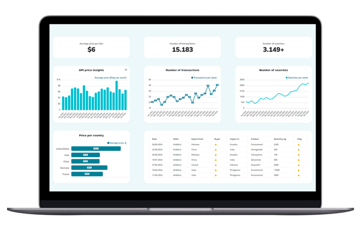
PRO Data Insights coverage for Carbamazepine: 2695 verified transactions across 503 suppliers and 327 buyers worldwide. Use the dataset to benchmark suppliers and monitor regulatory activity where available.
Where can I access the API market report for Carbamazepine?
Market report availability for Carbamazepine: Report Available. The report highlights demand trends, pricing drivers, and supplier landscape insights for procurement planning.