Erythropoietin API Manufacturers & Suppliers

Find, compare & contact
Filters
Custom request?
Type
Production region
Qualifications
Country of origin
 Follow us
Distributor
Produced in:

Established in: 2019
MOQ: 1 kg
Employees: 10+



Focused on pharmaceutical industry
Reasonable price for the customers
Full service from R&D stage to commercial stage
+ 0
All certificates



Distributor
Produced in:

Established in: 1997
MOQ: -
Employees: 50

GMP and GDP certified
Biotechnological research leadership and manufacturer
Extensive distribution network for product global accessibility
+ 0
All certificates

Producer
+ 0
All certificates
How does it work?

You can register for free as long as you are registering on behalf of a legal company related to the pharmaceutical industry

Search in the search bar the product that you’re looking for. We’ll show you an overview of all available suppliers. Use the filters to select the relevant suppliers only

Have you found interesting suppliers? Then it’s time to contact them. Use the send inquiry button and send them a message. You can send for each product, 3 inquiries per week

Suppliers get notified by Pharmaoffer that they’ve received a new inquiry. They will come back to you with their questions, certificates, and offer in the chat on Pharmaoffer. We will send you an email in case of any news

Does the supplier meet your quality and commercial requirements? Then you can place the order. Just follow the steps of our order module
Looking for Erythropoietin API 11096-26-7?
- Description:
- Here you will find a list of producers, manufacturers and distributors of Erythropoietin. You can filter on certificates such as GMP, FDA, CEP, Written Confirmation and more. Send inquiries for free and get in direct contact with the supplier of your choice.
- API | Excipient name:
- Erythropoietin
- Synonyms:
- E.P.O. , Epoetin alfa , Epoetin alfa rDNA , Epoetin alfa , recombinant , Epoetin beta , Epoetin beta rDNA , Epoetin epsilon , Epoetin gamma , Epoetin gamma rDNA , Epoetin kappa , Epoetin omega , Erythropoiesis stimulating factor , ESF , SH-polypeptide-72
- Cas Number:
- 11096-26-7
- DrugBank number:
- DB00016
- Unique Ingredient Identifier:
- 64FS3BFH5W
About Erythropoietin
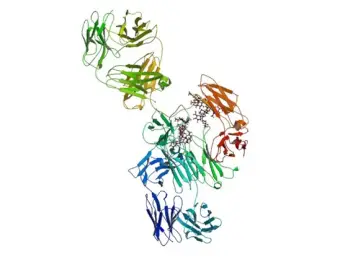
More information about the use of: Erythropoietin. Erythropoietin (EPO) is a growth factor produced in the kidneys that stimulates the production of red blood cells. It works by promoting the division and differentiation of committed erythroid progenitors in the bone marrow. Epoetin alfa (Epoge) was developed by Amgen Inc.
in 1983 as the first rhEPO commercialized in the United States, followed by other alfa and beta formulations. Epoetin alfa is a 165-amino acid erythropoiesis-stimulating glycoprotein produced in cell culture using recombinant DNA technology and is used for the treatment of patients with anemia associated with various clinical conditions, such as chronic renal failure, antiviral drug therapy, chemotherapy, or a high risk for perioperative blood loss from surgical procedures. It has a molecular weight of approximately 3000 daltons and is produced by mammalian cells into which the human erythropoietin gene has been introduced. The product contains the identical amino acid sequence of isolated natural erythropoietin and has the same biological activity as the endogenous erythropoietin. Epoetin alfa biosimilar, such as Retacrit (epoetin alfa-epbx or epoetin zeta), has been formulated to allow more access to treatment options for patients in the market The biosimilar is approved by the FDA and EMA as a safe, effective and affordable biological product and displays equivalent clinical efficacy, potency, and purity to the reference product Epoetin alfa formulations can be administered intravenously or subcutaneously.
More information such as the structure, indication or toxicity is available on Drugbank, click the ID above.
Erythropoietin is a type of Erythropoietic growth factors
Erythropoietic growth factors belong to the subcategory of pharmaceutical active pharmaceutical ingredients (APIs) that are specifically designed to stimulate the production of red blood cells in the body. These growth factors play a crucial role in the treatment of various medical conditions associated with reduced red blood cell production, such as anemia caused by chronic kidney disease, cancer, or certain types of chemotherapy.
The primary erythropoietic growth factor used in pharmaceutical formulations is recombinant human erythropoietin (rhEPO). This synthetic version of the naturally occurring hormone erythropoietin is produced using biotechnology processes, ensuring high purity and potency. RhEPO acts by binding to specific receptors on bone marrow cells, thereby promoting the production and maturation of red blood cells.
The use of erythropoietic growth factors has significantly improved the management of anemia-related conditions. By increasing red blood cell count, these pharmaceutical APIs help enhance oxygen-carrying capacity, leading to improved energy levels and reduced fatigue in patients. Additionally, they have the potential to reduce the need for blood transfusions, which can be associated with certain risks and complications.
When formulating medications containing erythropoietic growth factors, stringent quality control measures are employed to ensure product safety and efficacy. These APIs are typically formulated into injectable formulations to allow for precise dosing and rapid absorption.
In conclusion, erythropoietic growth factors, particularly recombinant human erythropoietin, are vital pharmaceutical APIs used to stimulate red blood cell production in various medical conditions. Their use has revolutionized the management of anemia-related disorders and improved the quality of life for many patients.
Erythropoietin (Erythropoietic growth factors), classified under Hematopoietic Agents
Hematopoietic agents are a category of pharmaceutical active pharmaceutical ingredients (APIs) that play a crucial role in the treatment of various blood disorders and diseases. These agents stimulate the production, maturation, and function of blood cells, particularly those involved in the process of hematopoiesis, which is the formation of new blood cells.
One of the commonly used hematopoietic agents is erythropoietin, a glycoprotein hormone that regulates red blood cell production. It is employed in the treatment of anemia associated with chronic kidney disease, cancer chemotherapy, and certain other conditions. Another important hematopoietic agent is granulocyte colony-stimulating factor (G-CSF), which stimulates the production of white blood cells known as neutrophils. G-CSF is used to prevent infections in patients undergoing chemotherapy and to enhance the recovery of blood cell counts after bone marrow transplantation.
Thrombopoietin receptor agonists are another class of hematopoietic agents that promote the production of platelets, essential for blood clotting. These agents find applications in the management of thrombocytopenia, a condition characterized by low platelet counts.
Hematopoietic agents are typically administered through injections or infusions, and their dosage and frequency vary depending on the specific indication and patient's response. While these agents provide critical therapeutic benefits, their use requires careful monitoring to ensure optimal efficacy and safety.
In conclusion, hematopoietic agents are vital pharmaceutical APIs used to stimulate the production of blood cells and treat various blood disorders. Their use significantly improves patients' quality of life and plays a crucial role in managing hematological conditions.
Erythropoietin manufacturers | traders | suppliers
We have 3 companies offering Erythropoietin produced in 1 different countries.
Get in contact with the supplier of your choice:
- Apino Pharma Co., Ltd. from China, product country of origin China
- AXXO GmbH from Germany, product country of origin World
- Lek Pharma from Slovenia, product country of origin Slovenia
Let the supplier know whether you are looking for a product with a specific monograph such as EP (Ph. Eur.), USP, JP, BP or another quality. Or, whether you are looking for hydrochloride (HCl), anhydricum, base, micronisatum or a specific purity.
You can use the filters to find high-quality suppliers. For example, you can select GMP, FDA or ISO certified suppliers. Visit our FAQ page or use the chat box in the corner to get more information about Pharmaoffer.