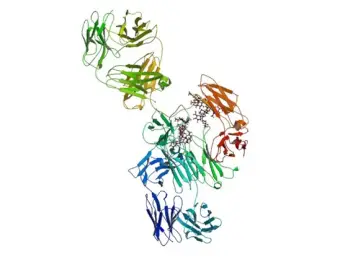
Icatibant API Manufacturers & Suppliers
14 verified resultsSmall-Quantity API Packs


Commercial-scale Suppliers
All certificates
All certificates
All certificates
All certificates
All certificates

All certificates
All certificates
All certificates
All certificates
All certificates
All certificates
All certificates
All certificates


Icatibant | CAS No: 130308-48-4 | GMP-certified suppliers
A medication that treats acute hereditary angioedema attacks in adults by reducing swelling, inflammation, and pain through selective bradykinin B2 receptor antagonism.
Therapeutic categories
Primary indications
- Icatibant is indicated for the treatment of acute attacks of hereditary angioedema (HAE) in adults 18 years of age and older
Product Snapshot
- Icatibant is a small molecule formulation supplied as a subcutaneous injectable solution
- It is primarily used for the treatment of acute hereditary angioedema attacks in adults
- The product holds approved status in key regulatory markets including the US, Canada, and the European Union
Clinical Overview
Clinically, icatibant is indicated for the treatment of acute attacks of hereditary angioedema (HAE) in adults aged 18 years and older. HAE is characterized by episodic, localized swelling mediated by bradykinin, a vasodilatory peptide generated due to dysfunctional or deficient C1-esterase-inhibitor activity within the kallikrein-kinin system. By selectively blocking B2 receptors, icatibant inhibits bradykinin’s binding and mitigates the associated symptoms of swelling, inflammation, and pain.
Pharmacodynamically, intravenous administration of icatibant has demonstrated dose- and time-dependent inhibition of bradykinin-induced vasodilation, hypotension, and tachycardia. Subcutaneous doses of 30 mg provide effective receptor blockade for at least six hours. Importantly, icatibant has been shown not to prolong the QTc interval at therapeutic and supratherapeutic doses in healthy subjects, mitigating concerns related to cardiac electrophysiology.
The pharmacokinetic profile supports dosing via subcutaneous injection, facilitating rapid onset during acute HAE attacks. Icatibant demonstrates renal excretion as a primary elimination route, which should be considered in patients with renal impairment.
From a safety perspective, adverse effects align with its mechanism, including injection site reactions and potential hypersensitivity. No major toxicities have been reported in controlled clinical trials. The approval of icatibant by both the FDA (2011) and EMA (2008) was supported by robust randomized clinical trials demonstrating expedited symptom relief compared to placebo.
For pharmaceutical sourcing and quality assurance, it is critical to procure icatibant APIs from suppliers adhering to stringent Good Manufacturing Practices (GMP). Analytical characterization should confirm peptide purity, correct stereochemistry, and resistance to enzymatic degradation to ensure potency and clinical efficacy. Consistent manufacturing processes are essential given its peptide nature and sensitivity to conformational changes.
Identification & chemistry
| Generic name | Icatibant |
|---|---|
| Molecule type | Biotech |
| CAS | 130308-48-4 |
| UNII | 7PG89G35Q7 |
| DrugBank ID | DB06196 |
Pharmacology
| Summary | Icatibant is a selective, competitive antagonist of the bradykinin B2 receptor, targeting the primary mediator of hereditary angioedema (HAE) symptoms. By inhibiting bradykinin binding, it counteracts vasodilation, swelling, and pain associated with acute HAE attacks. Pharmacodynamically, icatibant demonstrates dose-dependent inhibition of bradykinin-induced cardiovascular effects, supporting its role in symptom management. |
|---|---|
| Mechanism of action | Icatibant is a competitive antagonist selective for the bradykinin B2 receptor, with an affinity similar to bradykinin. Hereditary angioedema is caused by an absence or dysfunction of C1-esterase-inhibitor, a key regulator of the Factor XII/kallikrein proteolytic cascade that leads to bradykinin production. Bradykinin is a vasodilator thought to be responsible for the characteristic HAE symptoms of localized swelling, inflammation, and pain. Icatibant inhibits bradykinin from binding to the B2 receptor, thereby treating the clinical symptoms of an acute, episodic attack of HAE. |
| Pharmacodynamics | Following bradykinin challenge, intravenous administration of icatibant caused dose and time-dependent inhibition of the development of bradykinin-induced hypotension, vasodilation, and reflex tachycardia in healthy young subjects. Icatibant intravenous doses of 0.4 and 0.8 mg/kg infused over 4 hours inhibited response to bradykinin challenge for 6 to 8 hours following completion of the infusion. Based on exposure-response analysis, a subcutaneous dose of 30 mg icatibant is predicted to be effective against bradykinin challenge for at least 6 hours. The clinical significance of these findings is unknown. The effect of icatibant 30 and 90 mg following a single subcutaneous injection on QTc interval was evaluated in a randomized, placebo-, and active-controlled (moxifloxacin 400 mg) four-period crossover thorough QT study in 72 healthy subjects. In a study with demonstrated ability to detect small effects, the upper bound of the one-sided 95% confidence interval for the largest placebo-adjusted, baseline-corrected QTc based on individual correction method (QTcI) was below 10 ms, the threshold for regulatory concern. The dose of 90 mg is adequate to represent the high-exposure clinical scenario. |
Targets
| Target | Organism | Actions |
|---|---|---|
| B2 bradykinin receptor | Humans | antagonist |
| Aminopeptidase N | Humans | inhibitor |
ADME / PK
| Absorption | The absolute bioavailability of icatibant following a 30 mg subcutaneous dose is approximately 97%. Maximum plasma concentrations (C<sub>max</sub>) of 974 ± 280 ng/mL were reached when a single subcutaneous dose of 30 mg was administered. The AUC was 2165 ± 568 ng∙hr/mL. Icatibant did not accumulate following multiple doses. The pharmacokinetics of icatibant have been characterized in studies using both intravenous and subcutaneous administration to healthy subjects and patients. The pharmacokinetic profile of icatibant in patients with HAE is similar to that in healthy subjects. The absolute bioavailability of icatibant following a 30 mg subcutaneous dose is approximately 97%. Following subcutaneous administration of a single 30 mg dose of icatibant to healthy subjects (N=96), a mean (± standard deviation) maximum plasma concentration (C<sub>max</sub>) of 974 ± 280 ng/mL was observed after approximately 0.75 hours. The mean area under the concentration-time curve (AUC<sub>0-∞</sub>) after a single 30 mg dose was 2165 ± 568 ng·hr/mL, with no evidence of accumulation of icatibant following three 30 mg doses administered 6 hours apart. |
|---|---|
| Half-life | Following subcutaneous administration, mean elimination half-life was 1.4 ± 0.4 hours. |
| Protein binding | No information is available on the protein binding of icatibant |
| Metabolism | Icatibant is metabolized by proteolytic enzymes into inactive metabolites. The cytochrome P450 enzyme system is not involved with the metabolism of icatibant. |
| Route of elimination | Icatibant's inactive metabolites are primarily excreted in the urine, with less than 10% of the dose eliminated as unchanged drug. |
| Volume of distribution | Following subcutaneous administration, d volume of distribution at steady state (Vss) was 29.0 ± 8.7 L. |
| Clearance | Following subcutaneous administration, plasma clearance was 245 ± 58 mL/min. |
Formulation & handling
- Icatibant is a biotech peptide administered exclusively via subcutaneous injection, limiting oral formulation options.
- Stability considerations include protection from degradation typical of peptide APIs, necessitating controlled storage conditions.
- Formulation as a sterile solution for injection requires aseptic processing and validation to ensure product integrity.
Regulatory status
| Lifecycle | The active pharmaceutical ingredient’s primary patent in the United States expired in July 2019, allowing for generic entry across key markets including the US, Canada, and the EU. As a result, the product is currently in a mature market phase with established generic competition. |
|---|
| Markets | US, Canada, EU |
|---|
Supply Chain
| Supply chain summary | Icatibant is marketed primarily through a limited number of originator companies, with branded products available across the US, Canada, and EU markets. The presence of the key patent filed in 2019 indicates recent patent activity, which may influence the timing of generic competition. Overall, the patent landscape suggests current protection but potential future opportunities for generic manufacturers as exclusivity periods evolve. |
|---|
Safety
| Toxicity | Available data from published literature and the pharmacovigilance database with icatibant use in pregnant women have not identified a drug-associated risk of major birth defects, miscarriage or adverse maternal or fetal outcomes. In animal reproduction studies, icatibant, administered by the subcutaneous route during the period of organogenesis, did not cause structural abnormalities in rats or rabbits; however, premature birth and abortion were observed in rabbits at doses approximately 0.025 times the maximum recommended human dose (MRHD) and higher. Decreased embryofetal survival was observed in rabbits at a subcutaneous dose that was 13 times the MRHD. In a pre- and post-natal development study in rats, delayed parturition was observed at subcutaneous doses 0.5 times the MRHD and higher, which resulted in deaths of dams at doses 2 times the MRHD and higher. Fetal death and early pup deaths were observed with doses 2 times the MRHD. Two-year studies were conducted in CD1 mice and Wistar rats to assess the carcinogenic potential of icatibant. No evidence of tumorigenicity was observed in mice and rats at icatibant subcutaneous doses up to 15 mg/kg/day (twice per week) and 6 mg/kg/day (daily), respectively (approximately 10-fold and 6-fold greater than the MRHD on an AUC basis, respectively). Icatibant tested negative for genotoxicity in the in vitro Ames bacterial reverse mutation test, in vitro Chinese hamster bone marrow chromosome aberration assay, and in vivo mouse micronucleus test. Daily subcutaneous administration of icatibant to rats and dogs caused ovarian, uterine, and testicular atrophy/degeneration and adverse effects on the mammary and prostate glands. In rats, testicular atrophy, reduced prostate gland secretion, decreased testosterone levels and degenerate corpora lutea occurred at doses greater than or equal to 3 mg/kg (approximately 5-fold greater than the MRHD in males and 2-fold greater than the MRHD in females on an AUC basis) and a decrease in developing ovarian follicles, mammary gland masculinization, and uterine atrophy occurred at doses greater than or equal to 10 mg/kg (approximately 6-fold greater than MRHD in females on an AUC basis). In dogs, reduced sperm counts and uterine atrophy occurred at doses greater than or equal to 1 mg/kg (approximately 2-fold greater than the MRHD on an AUC basis). Atrophy of the testes and prostate with decreased testosterone levels, decreased ovary size and decreased number of developing follicles occurred at a dose of 10 mg/kg (approximately 30-fold greater than the MRHD in males and 15-fold greater than at the MRHD in females on an AUC basis). In contrast to the effects of daily icatibant administration, toxicity to the ovary, uterus, testis, mammary gland, and prostate did not occur in dogs treated twice a week for 9 months. AUC exposures from a dose of 3 mg/kg in these dogs were 5- and 3-fold the MRHD exposures in men and women, respectively. Sperm counts and testosterone remained unaffected over the course of the study in male dogs dosed twice a week. Reproduction studies in male mice and rats with daily administration of icatibant found no effects on fertility or reproductive performance with intravenous doses up to 81 mg/kg (approximately 5-fold greater than the MRHD on a mg/m2 basis) or subcutaneous doses up to 10 mg/kg (approximately 11-fold greater than the MRHD on an AUC basis), respectively. In a clinical study evaluating a 90 mg dose (30 mg in each of 3 subcutaneous sites), the adverse event profile was similar to that seen with 30 mg administered in a single subcutaneous site. In another clinical study, a dose of 3.2 mg/kg administered intravenously (approximately 8 times the therapeutic dose for HAE) caused erythema, itching, and hypotension in healthy subjects. No therapeutic intervention was necessary. |
|---|
- Icatibant demonstrated no genotoxicity in standard in vitro and in vivo tests, including Ames test and mouse micronucleus assay
- High subcutaneous doses in animal studies caused reproductive organ atrophy and endocrine changes
- No such effects observed with twice-weekly dosing in dogs at exposures exceeding clinical levels
Icatibant is a type of Indifferent resources
Indifferent resources, in the context of pharmaceutical active pharmaceutical ingredients (APIs), refer to the subcategory of materials used in the manufacturing process that do not react with or significantly affect the chemical properties of the API. These resources play a crucial role in ensuring the purity and stability of the final pharmaceutical product.
Indifferent resources include solvents, excipients, catalysts, and other auxiliary substances used during API synthesis or formulation. They are carefully selected to have minimal reactivity with the API, preserving its chemical integrity and therapeutic efficacy. The choice of indifferent resources depends on factors such as the API's chemical structure, solubility, and stability requirements.
By employing indifferent resources, pharmaceutical manufacturers can mitigate the risk of unwanted chemical reactions or degradation during the production and storage of APIs. This, in turn, enhances the quality and reliability of the pharmaceutical product.
In the pharmaceutical industry, the selection and use of indifferent resources are critical in complying with regulatory guidelines and ensuring the safety and efficacy of medications. Manufacturers must adhere to Good Manufacturing Practices (GMP) and perform comprehensive compatibility studies to identify suitable indifferent resources for their specific APIs.
Overall, indifferent resources serve as indispensable components in the pharmaceutical API manufacturing process, guaranteeing the production of high-quality, stable, and safe medications that meet stringent regulatory standards.
Icatibant (Indifferent resources), classified under Others
The others category refers to pharmaceutical APIs that do not fall under specific classifications such as antibiotics, antivirals, analgesics, or cardiovascular drugs. These APIs are diverse in nature and serve various therapeutic purposes, making them a crucial component of pharmaceutical formulations.
Pharmaceutical companies develop APIs in the others category to address specific medical conditions or target novel biological pathways. This category includes APIs used in oncology, neurology, immunology, and other specialized areas of medicine. The APIs in this category are often designed to interact with specific molecular targets or receptors, providing targeted therapeutic effects.
The development of APIs in the others category requires extensive research and testing to ensure their efficacy, safety, and compliance with regulatory standards. Pharmaceutical manufacturers employ advanced techniques such as chemical synthesis, biotechnology, and genetic engineering to produce these APIs.
Due to the broad range of applications and therapeutic uses, APIs in the others category contribute significantly to the advancement of medical treatments. Pharmaceutical companies constantly strive to innovate and discover new APIs within this category to address unmet medical needs and improve patient outcomes.
In conclusion, the others category of pharmaceutical APIs encompasses a diverse range of active ingredients used in drug formulation. These APIs play a crucial role in developing innovative therapies across various therapeutic areas, contributing to advancements in healthcare and patient well-being.
Icatibant API manufacturers & distributors
Compare qualified Icatibant API suppliers worldwide. We currently have 14 companies offering Icatibant API, with manufacturing taking place in 4 different countries. Use the table below to review supplier type, countries of origin, certifications, product portfolio and GMP audit availability.
| Supplier | Type | Country | Product origin | Certifications | Portfolio |
|---|---|---|---|---|---|
| AMBIOPHARM | Producer | United States | Unknown | CoA, USDMF | 10 products |
| Apino Pharma Co., Ltd. | Producer | China | China | cDMF, CoA, GMP, MSDS, WC | 229 products |
| BCN Peptides | Producer | Spain | Spain | CoA, USDMF | 13 products |
| Biophore India | Producer | India | India | CoA, USDMF | 46 products |
| Chengdu Shengnuo Biopharm... | Producer | China | China | BSE/TSE, CoA, GMP, MSDS, USDMF, WC | 33 products |
| Cipla | Producer | India | India | CoA, USDMF | 164 products |
| Dr. Reddy's | Producer | India | India | BSE/TSE, CoA, EDMF/ASMF, FDA, GMP, MSDS, USDMF, WC | 170 products |
| Global Pharma Tek | Distributor | India | India | BSE/TSE, CoA, FDA, GMP, ISO9001, MSDS | 484 products |
| Jiangsu Hansoh Pharma | Producer | China | China | CoA, USDMF | 10 products |
| MSN Life Sciences | Producer | India | India | CoA, USDMF, WC | 46 products |
| Mylan | Producer | India | India | CoA, USDMF | 201 products |
| Sinoway industrial Co.,Lt... | Distributor | China | China | CEP, CoA, GMP, ISO9001, MSDS, USDMF | 757 products |
| Sun Pharma | Producer | India | India | CoA, USDMF | 219 products |
| USV | Producer | India | India | CoA, USDMF | 35 products |
When sending a request, specify which Icatibant API quality you need: for example EP (Ph. Eur.), USP, JP, BP, or another pharmacopoeial standard, as well as the required grade (base, salt, micronised, specific purity, etc.).
Use the list above to find high-quality Icatibant API suppliers. For example, you can select GMP, FDA or ISO certified suppliers. Visit our help page to learn more about sourcing APIs via Pharmaoffer.