Global API sourcing simplified
We connect API buyers and suppliers worldwide with speed, trust, and full transparency.

Filters

Filters
Filter
Custom request?
Type
Production region
Qualifications
Show more
Country of origin
Show more

Cinchocaine API Manufacturers & Suppliers

3 verified results
When insight is your advantage
Full data, full access, full negotiation power
Total market transparency Total market transparency
|
Supplier trade data access Supplier trade data access
|
Buyer / supplier flow comparison Buyer / supplier flow comparison

Commercial-scale Suppliers

Distributor
Produced in  World
|

Employees: 200+

|
Audit Report: Currently Eurofins has no report for this supplier. Contact them to let them know you're interested!
Certifications: GMP
|
CEP
|
USDMF
|
MSDS
|
BSE/TSE

All certificates

GMP
CEP
USDMF
MSDS
BSE/TSE
CoA
Producer
Produced in  Japan
|
Audit Report: Currently Eurofins has no report for this supplier. Contact them to let them know you're interested!
Certifications: JDMF
|
CoA

All certificates

JDMF
CoA
Take control of your API sourcing
Submit a Special Inquiry and have Pharmaoffer activate verified suppliers.
Producer
Produced in  India
|
Audit Report: Currently Eurofins has no report for this supplier. Contact them to let them know you're interested!
Certifications: GMP
|
WC
|
CoA

All certificates

GMP
WC
CoA
Not active
Get full market intelligence report
€399,-
All Cinchocaine data. Full access. Full negotiation power
When insight is your advantage
Full data, full access, full negotiation power
Total market transparency Total market transparency
|
Supplier trade data access Supplier trade data access
|
Buyer / supplier flow comparison Buyer / supplier flow comparison
Trusted by 30,000+ registered pharma professionals:
Reach multinationals, SMEs, compounding pharmacies & more!
Procaps
Pfizer
Reckitt
Sanofi
Blau
Abbvie

Cinchocaine | CAS No: 85-79-0 | GMP-certified suppliers

A medication that provides reliable local and regional anesthesia and supports topical relief for anorectal conditions, suitable for diverse procedural and dermatologic applications.

Therapeutic categories

Agents for Treatment of Hemorrhoids and Anal Fissures for Topical UseAmidesAnalgesics and AnestheticsAnestheticsAnesthetics for Topical UseAnesthetics, Local
Generic name
Cinchocaine
Molecule type
small molecule
CAS number
85-79-0
DrugBank ID
DB00527
Approval status
Approved drug, Vet_approved drug
ATC code
D04AB02

Primary indications

  • For production of local or regional anesthesia by infiltration techniques such as percutaneous injection and intravenous regional anesthesia by peripheral nerve block techniques such as brachial plexus and intercostal and by central neural techniques such as lumbar and caudal epidural blocks

Product Snapshot

  • Cinchocaine is a small‑molecule local anesthetic supplied mainly in topical and rectal formulations
  • It is used for local and regional anesthesia across infiltration, peripheral nerve block, and central neural block applications
  • It is approved in the US and Canada, including veterinary use

Clinical Overview

Cinchocaine (CAS 85‑79‑0) is an amide‑type local anesthetic of high potency, structurally characterized as a quinolone derivative bearing a ketone‑substituted quinoline moiety. It is used primarily for surface anesthesia and for selected local or regional anesthetic techniques. Due to its toxicity profile, parenteral administration is largely limited to spinal anesthesia, and modern use is more commonly topical, including formulations for hemorrhoidal and anal fissure management and other dermatologic or mucosal anesthesia contexts.

Its clinical indication includes production of local or regional anesthesia via infiltration, peripheral nerve block procedures such as brachial plexus or intercostal blocks, and central neuraxial techniques including lumbar or caudal epidural approaches. Veterinary applications exist where approved.

Cinchocaine exerts its pharmacologic activity through voltage‑gated sodium channel inhibition. By reducing membrane permeability to sodium ions, it prevents depolarization and propagation of action potentials, resulting in reversible sensory blockade. Pharmacodynamic behavior is similar to lidocaine but with substantially greater potency and a narrower therapeutic margin.

Systemic absorption after topical application varies with dose, surface area, and tissue integrity. As an amide anesthetic, metabolism is expected to occur primarily via hepatic biotransformation, with elimination dependent on hepatic function and perfusion. Distribution and clearance parameters should be interpreted cautiously in populations with impaired liver function or in situations where high‑surface‑area exposure may increase systemic levels.

Toxicity concerns include central nervous system excitation progressing to depression, cardiovascular depression, and risk of severe adverse events if inadvertent intravascular administration occurs. Its potency increases the importance of dose control and appropriate formulation design. Local irritation or sensitization may occur with topical use.

Cinchocaine is present in various combination products for anorectal disorders and in some regional anesthesia preparations, although availability differs by market.

For API procurement, sourcing should prioritize manufacturers with demonstrated control of stereochemistry, residual solvent levels, and impurity profiles appropriate for high‑potency local anesthetics, along with robust documentation to support regulatory submissions.

Identification & chemistry

Generic name Cinchocaine
Molecule type Small molecule
CAS 85-79-0
UNII L6JW2TJG99
DrugBank ID DB00527

Pharmacology

SummaryDibucaine is an amide‑type local anesthetic that blocks the initiation and conduction of nerve impulses by inhibiting voltage‑gated sodium channels, reducing membrane permeability to sodium ions. This reversible channel blockade stabilizes neuronal membranes and prevents depolarization, producing localized conduction interruption. Its activity primarily involves sodium channel subunits Nav1.5 and Nav1.8, with additional interaction with calmodulin.
Mechanism of actionLocal anesthetics block both the initiation and conduction of nerve impulses by decreasing the neuronal membrane's permeability to sodium ions through sodium channel inhibition. This reversibly stabilizes the membrane and inhibits depolarization, resulting in the failure of a propagated action potential and subsequent conduction blockade.
PharmacodynamicsDibucaine is an amide-type local anesthetic, similar to lidocaine.
Targets
TargetOrganismActions
Sodium channel protein type 5 subunit alphaHumansinhibitor
Sodium channel protein type 10 subunit alphaHumansinhibitor
CalmodulinHumansinhibitor

ADME / PK

AbsorptionIn general, ionized forms (salts) of local anesthetics are not readily absorbed through intact skin. However, both nonionized (bases) and ionized forms of local anesthetics are readily absorbed through traumatized or abraded skin into the systemic circulation.
MetabolismPrimarily hepatic.

Formulation & handling

  • Low aqueous solubility and moderate lipophilicity favor incorporation into topical, rectal, and buccal semi-solid or mucosal delivery systems rather than aqueous solutions.
  • Solid-state API requires appropriate solubilizers or penetration enhancers in creams, ointments, and gels to ensure uniform dispersion and local availability.
  • Chemical stability can be formulation‑dependent due to the quinolone-derived structure, benefiting from protection from oxidation and strict control of pH in non-aqueous or minimally aqueous bases.

Regulatory status

LifecycleThe active ingredient is approaching a mature phase in its lifecycle in the US and Canada, where market exclusivities are driven primarily by patent expiry timing. As patents expire, these markets are expected to transition toward increased generic availability and price‑driven competition.
MarketsUS, Canada
Supply Chain
Supply chain summaryCinchocaine (dibucaine) appears to rely on a limited number of originator‑level manufacturers, with Novartis associated with the active ingredient and several packagers supporting downstream supply. Branded and private‑label topical products are available in the US and Canada, indicating established market presence across both regions. Patent expiry occurred long ago, so the product landscape already includes broad generic competition.

Safety

ToxicitySubcutaneous LD<sub>50</sub> in rat is 27 mg/kg. Symptoms of overdose include convulsions, hypoxia, acidosis, bradycardia, arrhythmias and cardiac arrest.
High Level Warnings:
  • Low subcutaneous LD50 in rats (27 mg/kg) indicates high acute toxicity
  • Handle with controls minimizing dermal and parenteral exposure
  • Overexposure may provoke severe CNS and cardiotoxic responses, including convulsions, hypoxia, acidosis, bradycardia, arrhythmias, and potential cardiac arrest

Cinchocaine is a type of Local anesthetics


Local anesthetics are a category of pharmaceutical Active Pharmaceutical Ingredients (APIs) commonly used to numb a specific area of the body during medical procedures or surgeries. They work by blocking the transmission of nerve signals, preventing the sensation of pain in the targeted region. Local anesthetics are vital for various medical applications, including dental procedures, minor surgeries, and childbirth.

The main mechanism of action for local anesthetics involves the reversible inhibition of sodium channels, which are responsible for the conduction of nerve impulses. By binding to these channels, local anesthetics prevent the influx of sodium ions, which blocks the generation and propagation of nerve signals. This results in temporary loss of sensation in the area where the medication is administered.

Local anesthetics can be categorized into two main types: esters and amides. Esters, such as procaine and benzocaine, are metabolized by plasma esterases, while amides, including lidocaine and bupivacaine, undergo hepatic metabolism. The choice of local anesthetic depends on factors such as the duration of action required, the specific procedure being performed, and the patient's medical history.

It is important to note that local anesthetics should be administered with caution, as they can have potential side effects, including allergic reactions, systemic toxicity, and nerve damage if used improperly. Therefore, proper dosage and administration techniques must be followed to ensure patient safety.

In summary, local anesthetics are essential pharmaceutical APIs used to temporarily block nerve signals, providing localized pain relief during medical procedures. Understanding the different types and their mechanisms of action allows healthcare professionals to select the most appropriate local anesthetic for each patient and procedure, ensuring optimal outcomes and patient comfort.

Cinchocaine API manufacturers & distributors

Compare qualified Cinchocaine API suppliers worldwide. We currently have 3 companies offering Cinchocaine API, with manufacturing taking place in 3 different countries. Use the table below to review supplier type, countries of origin, certifications, product portfolio and GMP audit availability.

SupplierTypeCountryProduct originCertificationsPortfolio
Distributor
United States World BSE/TSE, CEP, CoA, GMP, MSDS, USDMF441 products
Producer
India India CoA, GMP, WC12 products
Producer
Japan Japan CoA, JDMF28 products

When sending a request, specify which Cinchocaine API quality you need: for example EP (Ph. Eur.), USP, JP, BP, or another pharmacopoeial standard, as well as the required grade (base, salt, micronised, specific purity, etc.).

Use the list above to find high-quality Cinchocaine API suppliers. For example, you can select GMP, FDA or ISO certified suppliers. Visit our help page to learn more about sourcing APIs via Pharmaoffer.

Frequently asked questions about Cinchocaine API


Sourcing

What matters most when sourcing GMP-grade Cinchocaine?
When sourcing GMP‑grade Cinchocaine for the US and Canada, the key considerations are verification of GMP compliance and alignment with regional regulatory requirements. Because supply depends on a limited group of originator‑level manufacturers, confirming the producer’s quality systems and documentation is essential. Established generic competition means consistency of specifications and reliable batch‑to‑batch quality should also be assessed.
Which documents are typically required when sourcing Cinchocaine API?
Request the core API documentation set: CoA (3 companies), GMP (2 companies), WC (1 company), JDMF (1 company), USDMF (1 company). Confirm versions and validity dates match the destination market to avoid delays in qualification.
Which manufacturers are known to produce Cinchocaine API?
Known or reported manufacturers for Cinchocaine: LGM Pharma. Evaluate their GMP history, scale, and regional coverage before requesting dossiers or allocating demand.
How can I request quotes for Cinchocaine API from GMP suppliers?
Submit quote requests through the supplier listings with your specs and required documents (specifications, target volume, delivery timeline, and destination). Providing consistent details upfront speeds comparable offers and clarifies technical feasibility.
Is a GMP audit report available for Cinchocaine manufacturers?
Audit reports may be requested for Cinchocaine: 0 GMP audit reports available. Confirm the scope and recency of any audit before relying on it for qualification decisions.
How many suppliers offer Cinchocaine API on Pharmaoffer?
Reported supplier count for Cinchocaine: 3 verified suppliers. Filter listings by certifications, regions, and delivery options to match your qualification plan.
Which countries are known to manufacture Cinchocaine API?
Production countries reported for Cinchocaine: India (1 producer), Japan (1 producer). Knowing the manufacturing geography helps anticipate logistics lead times and import compliance needs.
Which certifications do suppliers of Cinchocaine usually hold?
Common certifications for Cinchocaine suppliers: CoA (3 companies), GMP (2 companies), WC (1 company), JDMF (1 company), USDMF (1 company). Always verify issuing authorities and expiry dates when reviewing audit packages.

Technical

What is Cinchocaine (CAS 85-79-0) used for?
Cinchocaine is a high‑potency amide local anesthetic used mainly for topical and selected regional anesthesia through voltage‑gated sodium channel blockade. It is common in formulations for hemorrhoidal or anal fissure management and other dermatologic or mucosal surface anesthesia. It may also be used for certain infiltration, peripheral nerve block, or neuraxial techniques where approved.
Which therapeutic class does Cinchocaine fall into?
Cinchocaine belongs to the following therapeutic categories: Agents for Treatment of Hemorrhoids and Anal Fissures for Topical Use, Amides, Analgesics and Anesthetics, Anesthetics, Anesthetics for Topical Use. This positioning helps teams compare alternative APIs, anticipate pharmacology expectations, and align early research priorities.
What conditions is Cinchocaine mainly prescribed for?
The primary indications for Cinchocaine: For production of local or regional anesthesia by infiltration techniques such as percutaneous injection and intravenous regional anesthesia by peripheral nerve block techniques such as brachial plexus and intercostal and by central neural techniques such as lumbar and caudal epidural blocks. These use cases frame the target patient populations and help prioritize formulation and safety evaluations.
How does Cinchocaine work?
Local anesthetics block both the initiation and conduction of nerve impulses by decreasing the neuronal membrane's permeability to sodium ions through sodium channel inhibition. This reversibly stabilizes the membrane and inhibits depolarization, resulting in the failure of a propagated action potential and subsequent conduction blockade.
What should someone know about the safety or toxicity profile of Cinchocaine?
Cinchocaine has a narrow therapeutic margin and high acute toxicity, reflected by a low subcutaneous LD50 in rats (27 mg/kg). Overexposure can produce severe CNS and cardiovascular effects such as convulsions, hypoxia, acidosis, bradycardia, arrhythmias, and possible cardiac arrest. Because systemic absorption can occur, especially with large or compromised application sites, handling and clinical use should minimize dermal and parenteral exposure and ensure strict dose control. Local irritation or sensitization may also occur with topical administration.
What are important formulation and handling considerations for Cinchocaine as an API?
Cinchocaine’s low aqueous solubility and moderate lipophilicity support its use in semi‑solid topical, rectal, or buccal formulations, often with solubilizers or penetration enhancers to achieve uniform dispersion. Minimizing water content and controlling pH helps maintain chemical stability, as the molecule is sensitive to oxidation. Because absorption increases through damaged skin, handling should limit unintended exposure. Primary hepatic metabolism does not directly affect formulation but underscores the need to manage systemic uptake.
Is Cinchocaine a small molecule?
Cinchocaine is classified as a small molecule. That classification shapes process design, impurity profiling, and analytical control strategies.
Are there special stability concerns for oral Cinchocaine?
Oral preparations would need to account for Cinchocaine’s low aqueous solubility, which can limit uniform dispersion in water‑based systems. Its quinolone‑derived structure shows formulation‑dependent chemical stability, requiring protection from oxidation and strict pH control. These factors make stability management more challenging in aqueous oral environments.

Regulatory

Where is Cinchocaine approved or in use globally?
Cinchocaine is reported as approved in the following major regions: US, Canada. Understanding geographic coverage informs regulatory filings, supply planning, and risk assessments before escalating procurement.
What’s the regulatory and patent landscape for Cinchocaine right now?
Regulatory considerations for Cinchocaine relate to meeting US and Canadian requirements for active pharmaceutical ingredients, including quality, safety, and manufacturing standards. Patent status is determined by jurisdiction‑specific filings and protections in the US and Canada.

Pharmaoffer

How does Pharmaoffer’s Smart Sourcing Service help with Cinchocaine procurement?
Pharmaoffer's Smart Sourcing Service coordinates compliant suppliers, documentation, and competitive quotes for Cinchocaine. It centralizes outreach, follow-ups, and document validation to shorten procurement timelines.
Is Cinchocaine included in the PRO Data Insights coverage?
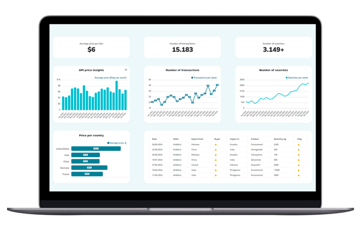
PRO Data Insights coverage for Cinchocaine: 165 verified transactions across 50 suppliers and 49 buyers worldwide. Use the dataset to benchmark suppliers and monitor regulatory activity where available.
Where can I access the API market report for Cinchocaine?
Market report availability for Cinchocaine: Report Available. The report highlights demand trends, pricing drivers, and supplier landscape insights for procurement planning.