Global API sourcing simplified
We connect API buyers and suppliers worldwide with speed, trust, and full transparency.

Filters

Filters
Filter
Custom request?
Type
Production region
Qualifications
Show more
Country of origin

Moclobemide API Manufacturers & Suppliers

1 verified results
Get full market intelligence report
Full access. Full negotiation power All Moclobemide data. Full access. Full negotiation power

Commercial-scale Suppliers

Producer
Produced in  Italy
|
Audit Report: Click here for more information on Eurofins audit reports
Certifications: GMP
|
CoA

All certificates

GMP
CoA
Not active
Take control of your API sourcing
Submit a Special Inquiry and have Pharmaoffer activate verified suppliers.
Get full market intelligence report
€399,-
All Moclobemide data. Full access. Full negotiation power
When insight is your advantage
Full data, full access, full negotiation power
Total market transparency Total market transparency
|
Supplier trade data access Supplier trade data access
|
Buyer / supplier flow comparison Buyer / supplier flow comparison
Trusted by 30,000+ registered pharma professionals:
Reach multinationals, SMEs, compounding pharmacies & more!
Procaps
Pfizer
Reckitt
Sanofi
Blau
Abbvie

Moclobemide | CAS No: 71320-77-9 | GMP-certified suppliers

A medication that supports the management of major depressive disorder and bipolar disorder, offering reliable therapeutic coverage for psychiatric care needs in finished‑product development.

Therapeutic categories

Acids, CarbocyclicAgents that produce hypertensionAgents that reduce seizure thresholdAmidesAntidepressive AgentsAntidepressive Agents Indicated for Depression
Generic name
Moclobemide
Molecule type
small molecule
CAS number
71320-77-9
DrugBank ID
DB01171
Approval status
Approved drug, Investigational drug
ATC code
N06AG02

Primary indications

  • For the treatment of major depressive disorder and bipolar disorder

Product Snapshot

  • Oral small‑molecule formulation available mainly as tablets and related coated tablet forms
  • Used for major depressive disorder and bipolar disorder
  • Approved in Canada with additional investigational status in other regions

Clinical Overview

Moclobemide (CAS 71320-77-9) is a reversible inhibitor of monoamine oxidase A used in the management of major depressive disorder and in some contexts bipolar depression. As a selective RIMA, it is designed to elevate central monoamine concentrations through transient MAO-A inhibition, with clinical use focused on alleviating depressive symptoms without the dietary restrictions associated with irreversible MAO inhibition.

Its pharmacological activity reflects selective and reversible binding to MAO-A in noradrenergic neurons, particularly within the locus coeruleus. This reduces oxidative deamination of serotonin, norepinephrine, and dopamine, thereby increasing their synaptic availability. Although MAO-B is more closely associated with serotonergic neurons of the raphe nuclei, moclobemide exhibits minimal MAO-B inhibition at therapeutic concentrations.

After oral administration, moclobemide is rapidly absorbed and subject to extensive first-pass metabolism. It is metabolized primarily by hepatic pathways involving CYP2C19, CYP2C9, and CYP2D6, and it also acts as an inhibitor of several of these isoenzymes. The degree of enzyme inhibition varies and can contribute to clinically relevant drug–drug interactions, particularly with serotonergic agents. Elimination occurs mainly through hepatic metabolism with urinary excretion of metabolites.

Safety considerations include the potential for serotonin syndrome when combined with serotonergic drugs and a reduced but present risk of hypertensive reactions with sympathomimetics. Compared with older tricyclic antidepressants, moclobemide exhibits negligible anticholinergic and antihistaminic effects, which influences its tolerability profile. It can lower the seizure threshold and should be used cautiously in predisposed individuals.

Moclobemide is available globally under several brand names, most commonly in immediate‑release oral formulations used in psychiatric care settings.

For API sourcing, suppliers should provide verifiable compliance with pharmacopoeial specifications, consistent impurity control, and robust documentation of manufacturing processes to support regulatory submissions and ensure suitability for finished‑product formulation.

Identification & chemistry

Generic name Moclobemide
Molecule type Small molecule
CAS 71320-77-9
UNII PJ0Y7AZB63
DrugBank ID DB01171

Pharmacology

SummaryMoclobemide is a selective, reversible inhibitor of monoamine oxidase A that reduces the breakdown of key monoamine neurotransmitters. By limiting MAO‑A–mediated metabolism in noradrenergic and related pathways, it increases synaptic monoamine availability. This pharmacologic activity supports its use in conditions characterized by dysregulated mood.
Mechanism of actionThe mechanism of action of moclobemide involves the selective, reversible inhibition of MAO-A. This inhibition leads to a decrease in the metabolism and destruction of monoamines in the neurotransmitters. This results in an increase in the monoamines, relieving depressive symptoms .
PharmacodynamicsA selective, reversible inhibitor of monoamine oxidase (MAO) which increases the . Besides its presence in sympathetic nerves, there is an abundant evidence that MAO-A is localized in noradrenergic neurons in the locus coeruleus and MAO-B is closely associated with serotonergic neurons of the raphe nucleus .
Targets
TargetOrganismActions
Amine oxidase [flavin-containing] AHumansantagonist, inhibitor
Monoamine oxidaseHumansantagonist
Amine oxidase [flavin-containing] BHumansantagonist

ADME / PK

AbsorptionWell absorbed from the gastrointestinal tract (> 95%). The presence of food reduces the rate but not the extent of absorption. Hepatic first-pass metabolism reduces bioavailability to about 56% following administration of one dose, but increases to 90% with steady-state dosing as a result of saturation of the first pass effect. Peak plasma concentrations are reached within 0.3 - 1 hours following oral administration with a terminal half-life of 1.6h .
Half-life1-2 hours (4 hours in cirrhotic patients); metabolites are renally excreted
Protein bindingApproximately 50% (primarily to albumin)
MetabolismMoclobemide is almost completely metabolized in the liver by Cytochrome P450 2C19 and 2D6. Moclobemide is a substrate of CYP2C19. Although it acts as an inhibitor of CYP1A2, CYP2C19, and CYP2D6 .
Route of eliminationMoclobemide is almost completely renally excreted .
Volume of distribution1-1.5 L/Kg
ClearanceClearance of 30-78 L/h , mainly excreted in urine.

Formulation & handling

  • Oral small‑molecule API suitable for conventional tablet and solution formulations, with moderate aqueous solubility supporting standard solid‑dose manufacturing.
  • Chemically stable solid; typical handling focuses on protection from moisture and controlling particle size for consistent dissolution.
  • As a reversible MAO‑A inhibitor, dietary‑interaction potential (tyramine sensitivity) may necessitate formulation and packaging considerations to support clear use instructions.

Regulatory status

LifecyclePatent protections for this API have lapsed in Canada, and the market is now supported by established generic competition. Overall, the product is in a mature phase of its lifecycle with stable availability across the Canadian market.
MarketsCanada
Supply Chain
Supply chain summaryMoclobemide was originally developed by a single originator, with current supply in Canada centered on a limited set of branded presentations. Global branded presence is modest, as the product is not widely marketed in the US or EU. Patent expiry occurred many years ago, so generic competition is established or readily feasible where the product is marketed.

Safety

ToxicityLD50 (mouse) is 730mg/kg and LD50 (rat) is 1,300mg/kg. Signs of toxicity include hypertension, drowsiness, dizziness, confusion, tremors, headache, agitation, muscle rigidity and seizures . The effects of moclobemide alone in overdose are negligible, even with high volume ingestion. However, moclobemide overdose with a serotonergic agent (even in small, therapeutic doses) can cause severe serotonin toxicity. The elimination half-life is prolonged by two to four times in overdose, compared with that found in healthy volunteers given therapeutic doses .
High Level Warnings:
  • Acute toxicity is moderate, with reported LD50 values of 730 mg/kg (mouse) and 1,300 mg/kg (rat)
  • Observed toxicological responses include CNS excitation (tremors, seizures, agitation) and autonomic effects such as hypertension
  • Co‑exposure with serotonergic agents significantly increases risk of severe serotonin toxicity, even at low concomitant doses

Moclobemide is a type of Antidepressants


Antidepressants are a category of pharmaceutical Active Pharmaceutical Ingredients (APIs) widely used in the treatment of depression and other mood disorders. These medications work by balancing the levels of certain chemicals in the brain called neurotransmitters, such as serotonin, norepinephrine, and dopamine.

There are several types of antidepressants available, each with its own mechanism of action and efficacy. Selective serotonin reuptake inhibitors (SSRIs) are commonly prescribed as a first-line treatment for depression. They prevent the reabsorption of serotonin, resulting in increased serotonin levels in the brain. Examples of popular SSRIs include fluoxetine, sertraline, and escitalopram.

Tricyclic antidepressants (TCAs) are another class of antidepressants that work by blocking the reuptake of both serotonin and norepinephrine. They are generally used when SSRIs are ineffective or not well-tolerated. Amitriptyline, nortriptyline, and imipramine are commonly prescribed TCAs.

Other antidepressants include serotonin-norepinephrine reuptake inhibitors (SNRIs), atypical antidepressants, and monoamine oxidase inhibitors (MAOIs). SNRIs, such as venlafaxine and duloxetine, inhibit the reuptake of both serotonin and norepinephrine. Atypical antidepressants, including bupropion and mirtazapine, have diverse mechanisms of action, targeting multiple neurotransmitters. MAOIs, such as phenelzine and tranylcypromine, work by inhibiting the enzyme monoamine oxidase, which breaks down neurotransmitters.

It is important to note that antidepressants may have various side effects and require close monitoring by healthcare professionals. Dosages and treatment duration vary based on individual needs and response. Antidepressants are typically prescribed as part of a comprehensive treatment plan that may include psychotherapy and lifestyle modifications.

In conclusion, antidepressants are a vital category of pharmaceutical APIs used to manage depression and related mood disorders. They act on neurotransmitters in the brain to alleviate symptoms and improve overall well-being. It is crucial to consult with a healthcare provider to determine the most suitable antidepressant and monitor its effects.

Moclobemide API manufacturers & distributors

Compare qualified Moclobemide API suppliers worldwide. We currently have 1 companies offering Moclobemide API, with manufacturing taking place in 1 different countries. Use the table below to review supplier type, countries of origin, certifications, product portfolio and GMP audit availability.

SupplierTypeCountryProduct originCertificationsPortfolio
Producer
Italy Italy CoA, GMP44 products

When sending a request, specify which Moclobemide API quality you need: for example EP (Ph. Eur.), USP, JP, BP, or another pharmacopoeial standard, as well as the required grade (base, salt, micronised, specific purity, etc.).

Use the list above to find high-quality Moclobemide API suppliers. For example, you can select GMP, FDA or ISO certified suppliers. Visit our help page to learn more about sourcing APIs via Pharmaoffer.

Frequently asked questions about Moclobemide API


Sourcing

What matters most when sourcing GMP-grade Moclobemide?
Key considerations include confirming that the manufacturer operates under GMP and can provide Canada‑compliant quality and regulatory documentation. Given the limited number of suppliers active in Canada, supply continuity and batch-to-batch consistency are important. Verifying the source’s experience with established generic production and its ability to meet local release testing requirements also matters.
Which documents are typically required when sourcing Moclobemide API?
Request the core API documentation set: GMP (1 company), CoA (1 company). Confirm versions and validity dates match the destination market to avoid delays in qualification.
Which manufacturers are known to produce Moclobemide API?
Known or reported manufacturers for Moclobemide: . Evaluate their GMP history, scale, and regional coverage before requesting dossiers or allocating demand.
How can I request quotes for Moclobemide API from GMP suppliers?
Submit quote requests through the supplier listings with your specs and required documents (specifications, target volume, delivery timeline, and destination). Providing consistent details upfront speeds comparable offers and clarifies technical feasibility.
Is a GMP audit report available for Moclobemide manufacturers?
Audit reports may be requested for Moclobemide: 1 GMP audit report available. Confirm the scope and recency of any audit before relying on it for qualification decisions.
How many suppliers offer Moclobemide API on Pharmaoffer?
Reported supplier count for Moclobemide: 1 verified suppliers. Filter listings by certifications, regions, and delivery options to match your qualification plan.
Which countries are known to manufacture Moclobemide API?
Production countries reported for Moclobemide: Italy (1 producer). Knowing the manufacturing geography helps anticipate logistics lead times and import compliance needs.
Which certifications do suppliers of Moclobemide usually hold?
Common certifications for Moclobemide suppliers: GMP (1 company), CoA (1 company). Always verify issuing authorities and expiry dates when reviewing audit packages.

Technical

What is Moclobemide (CAS 71320-77-9) used for?
Moclobemide is used for the treatment of major depressive disorder and is also applied in some cases of bipolar depression. As a reversible inhibitor of monoamine oxidase A, it increases synaptic serotonin, norepinephrine, and dopamine to help alleviate depressive symptoms.
Which therapeutic class does Moclobemide fall into?
Moclobemide belongs to the following therapeutic categories: Acids, Carbocyclic, Agents that produce hypertension, Agents that reduce seizure threshold, Amides, Antidepressive Agents. This positioning helps teams compare alternative APIs, anticipate pharmacology expectations, and align early research priorities.
What conditions is Moclobemide mainly prescribed for?
The primary indications for Moclobemide: For the treatment of major depressive disorder and bipolar disorder. These use cases frame the target patient populations and help prioritize formulation and safety evaluations.
How does Moclobemide work?
The mechanism of action of Moclobemide involves the selective, reversible inhibition of MAO-A. This inhibition leads to a decrease in the metabolism and destruction of monoamines in the neurotransmitters. This results in an increase in the monoamines, relieving depressive symptoms .
What should someone know about the safety or toxicity profile of Moclobemide?
Moclobemide shows moderate acute toxicity, with reported LD50 values of 730 mg/kg in mice and 1,300 mg/kg in rats. Toxic effects can include CNS excitation such as tremors, seizures, and agitation, as well as autonomic responses like hypertension. Co‑administration with serotonergic agents markedly increases the risk of severe serotonin toxicity, and the drug may lower the seizure threshold. Hypertensive reactions with sympathomimetics remain possible despite its reversible MAO‑A selectivity.
What are important formulation and handling considerations for Moclobemide as an API?
Key considerations include controlling particle size and moisture exposure to maintain consistent dissolution and stability of this chemically stable solid. Its moderate aqueous solubility supports conventional tablet or oral solution formulations. As a reversible MAO‑A inhibitor, packaging and labeling should emphasize appropriate use instructions related to dietary interaction potential. Standard handling precautions for small‑molecule APIs apply, including avoidance of unnecessary exposure and maintaining suitable environmental controls.
Is Moclobemide a small molecule?
Moclobemide is classified as a small molecule. That classification shapes process design, impurity profiling, and analytical control strategies.
Are there special stability concerns for oral Moclobemide?
Oral Moclobemide is a chemically stable solid, so routine protection from moisture is the primary stability consideration. Control of particle size is important to maintain consistent dissolution in tablet formulations. Moderate aqueous solubility supports standard solid‑dose manufacturing without requiring special stabilization measures. Packaging may be designed to support clear use instructions related to its MAO‑A inhibitor profile.

Regulatory

Where is Moclobemide approved or in use globally?
Moclobemide is reported as approved in the following major regions: Canada. Understanding geographic coverage informs regulatory filings, supply planning, and risk assessments before escalating procurement.
What’s the regulatory and patent landscape for Moclobemide right now?
Moclobemide is regulated for use in Canada, where it is subject to the country’s established requirements for prescription pharmaceuticals. Its ongoing oversight follows national standards for safety, quality, and manufacturing compliance. Patent status can vary by jurisdiction and should be verified through the appropriate national or regional intellectual property databases.

Pharmaoffer

How does Pharmaoffer’s Smart Sourcing Service help with Moclobemide procurement?
Pharmaoffer's Smart Sourcing Service coordinates compliant suppliers, documentation, and competitive quotes for Moclobemide. It centralizes outreach, follow-ups, and document validation to shorten procurement timelines.
Is Moclobemide included in the PRO Data Insights coverage?
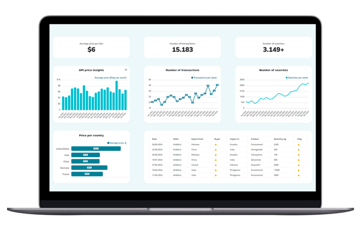
PRO Data Insights coverage for Moclobemide: 57 verified transactions across 19 suppliers and 12 buyers worldwide. Use the dataset to benchmark suppliers and monitor regulatory activity where available.
Where can I access the API market report for Moclobemide?
Market report availability for Moclobemide: Report Available. The report highlights demand trends, pricing drivers, and supplier landscape insights for procurement planning.