Global API sourcing simplified
We connect API buyers and suppliers worldwide with speed, trust, and full transparency.

Filters

Filters
Filter
Custom request?
Type
Production region
Qualifications
Show more
Country of origin
Show more

Eliquis (Apixaban) API Manufacturers & Suppliers

35 verified results
Take control of your API sourcing
Submit a Special Inquiry and have Pharmaoffer activate verified suppliers.

Commercial-scale Suppliers

Producer
Produced in  Poland
|

Employees: 455+

|
Audit Report: Click here for more information on Eurofins audit reports
Certifications: GMP
|
FDA
|
USDMF
|
EDMF/ASMF
|
MSDS

All certificates

GMP
FDA
USDMF
EDMF/ASMF
MSDS
BSE/TSE
CoA
Producer
Produced in  Canada
|

Employees: 550+

|
Audit Report: Currently Eurofins has no report for this supplier. Contact them to let them know you're interested!
Certifications: GMP
|
FDA
|
USDMF
|
MSDS
|
BSE/TSE

All certificates

GMP
FDA
USDMF
MSDS
BSE/TSE
CoA
Take control of your API sourcing
Submit a Special Inquiry and have Pharmaoffer activate verified suppliers.
Producer
Produced in  China
|

Employees: 25+

|
Audit Report: Currently Eurofins has no report for this supplier. Contact them to let them know you're interested!
Certifications: MSDS
|
BSE/TSE
|
ISO9001
|
CoA

All certificates

MSDS
BSE/TSE
ISO9001
CoA
Distributor
Produced in  China
|

Employees: 50+

|
Audit Report: Currently Eurofins has no report for this supplier. Contact them to let them know you're interested!
Certifications: GMP
|
USDMF
|
MSDS
|
ISO9001
|
CoA

All certificates

GMP
USDMF
MSDS
ISO9001
CoA
Producer
Produced in  Turkey
|

Employees: 100+

|
Audit Report: Currently Eurofins has no report for this supplier. Contact them to let them know you're interested!
Certifications: GMP
|
USDMF
|
MSDS
|
WC
|
CoA

All certificates

GMP
USDMF
MSDS
WC
CoA
Producer
Produced in  India
|

Employees: 10k+

|
Audit Report: Currently Eurofins has no report for this supplier. Contact them to let them know you're interested!
Certifications: GMP
|
USDMF
|
MSDS
|
BSE/TSE
|
ISO9001

All certificates

GMP
USDMF
MSDS
BSE/TSE
ISO9001
CoA
Get full market intelligence report
€399,-
All Apixaban data. Full access. Full negotiation power
Distributor
Produced in  United States
|

Employees: 50+

|
Audit Report: Click here for more information on Eurofins audit reports
Certifications: GMP
|
CEP
|
USDMF
|
MSDS
|
BSE/TSE

All certificates

GMP
CEP
USDMF
MSDS
BSE/TSE
ISO9001
CoA
Producer
Produced in  India
|

Employees: 19

|
Audit Report: Currently Eurofins has no report for this supplier. Contact them to let them know you're interested!
Certifications: GMP
|
FDA
|
CoA

All certificates

GMP
FDA
CoA
Take control of your API sourcing
Submit a Special Inquiry and have Pharmaoffer activate verified suppliers.
Distributor
Produced in  India
|

Employees: 25

|
Audit Report: Currently Eurofins has no report for this supplier. Contact them to let them know you're interested!
Certifications: GMP
|
FDA
|
CEP
|
USDMF
|
MSDS

All certificates

GMP
FDA
CEP
USDMF
MSDS
BSE/TSE
ISO9001
CoA
Producer
Produced in  India
|

Employees: 1-5

|
Audit Report: Currently Eurofins has no report for this supplier. Contact them to let them know you're interested!
Certifications: GMP
|
CoA

All certificates

GMP
CoA
Producer
Produced in  India
|

Employees: 2000+

|
Audit Report: Click here for more information on Eurofins audit reports
Certifications: GMP
|
FDA
|
USDMF
|
EDMF/ASMF
|
MSDS

All certificates

GMP
FDA
USDMF
EDMF/ASMF
MSDS
BSE/TSE
ISO9001
WC
CoA
Distributor
Produced in  China
|

Employees: 200+

|
Audit Report: Currently Eurofins has no report for this supplier. Contact them to let them know you're interested!
Certifications: CoA

All certificates

CoA
Get full market intelligence report
€399,-
All Apixaban data. Full access. Full negotiation power
Producer
Produced in  China
|

Employees: 100+

|
Audit Report: Currently Eurofins has no report for this supplier. Contact them to let them know you're interested!
Certifications: GMP
|
MSDS
|
CoA

All certificates

GMP
MSDS
CoA
Distributor
Produced in  World
|

Employees: 50

|
Audit Report: Currently Eurofins has no report for this supplier. Contact them to let them know you're interested!
Certifications: GMP
|
USDMF
|
MSDS
|
ISO9001
|
KDMF

All certificates

GMP
USDMF
MSDS
ISO9001
KDMF
CoA
Distributor
Produced in  China
|

Employees: 50+

|
Audit Report: Currently Eurofins has no report for this supplier. Contact them to let them know you're interested!
Certifications: GMP
|
FDA
|
CEP
|
USDMF
|
MSDS

All certificates

GMP
FDA
CEP
USDMF
MSDS
BSE/TSE
ISO9001
WC
CoA
Producer
Produced in  Czech Republic
|
Audit Report: Currently Eurofins has no report for this supplier. Contact them to let them know you're interested!
Certifications: CoA

All certificates

CoA
Get full market intelligence report
€399,-
All Apixaban data. Full access. Full negotiation power
Distributor
Produced in  Singapore
|

Employees: 50+

|
Audit Report: Currently Eurofins has no report for this supplier. Contact them to let them know you're interested!
Certifications: GMP
|
FDA
|
CEP
|
USDMF
|
EDMF/ASMF

All certificates

GMP
FDA
CEP
USDMF
EDMF/ASMF
MSDS
BSE/TSE
ISO9001
JDMF
WC
KDMF
CoA
Producer
Produced in  Japan
|
Audit Report: Currently Eurofins has no report for this supplier. Contact them to let them know you're interested!
Certifications: CoA

All certificates

CoA
Producer
Produced in  India
|
Audit Report: Click here for more information on Eurofins audit reports
Certifications: USDMF
|
CoA

All certificates

USDMF
CoA
Producer
Produced in  China
|
Audit Report: Click here for more information on Eurofins audit reports
Certifications: USDMF
|
CoA

All certificates

USDMF
CoA
Take control of your API sourcing
Submit a Special Inquiry and have Pharmaoffer activate verified suppliers.
Producer
Produced in  Malta
|
Audit Report: Click here for more information on Eurofins audit reports
Certifications: GMP
|
CoA

All certificates

GMP
CoA
Producer
Produced in  India
|
Audit Report: Currently Eurofins has no report for this supplier. Contact them to let them know you're interested!
Certifications: GMP
|
CoA

All certificates

GMP
CoA
Producer
Produced in  India
|
Audit Report: Click here for more information on Eurofins audit reports
Certifications: USDMF
|
CoA

All certificates

USDMF
CoA
Producer
Produced in  Spain
|
Audit Report: Currently Eurofins has no report for this supplier. Contact them to let them know you're interested!
Certifications: USDMF
|
CoA

All certificates

USDMF
CoA
Get full market intelligence report
€399,-
All Apixaban data. Full access. Full negotiation power
Producer
Produced in  India
|

Employees: 21,650

|
Audit Report: Click here for more information on Eurofins audit reports
Certifications: GMP
|
FDA
|
USDMF
|
MSDS
|
BSE/TSE

All certificates

GMP
FDA
USDMF
MSDS
BSE/TSE
WC
KDMF
CoA
Producer
Produced in  Unknown
|
Audit Report: Currently Eurofins has no report for this supplier. Contact them to let them know you're interested!
Certifications: USDMF
|
CoA

All certificates

USDMF
CoA
Producer
Produced in  India
|
Audit Report: Click here for more information on Eurofins audit reports
Certifications: USDMF
|
CoA

All certificates

USDMF
CoA
Producer
Produced in  India
|
Audit Report: Currently Eurofins has no report for this supplier. Contact them to let them know you're interested!
Certifications: GMP
|
USDMF
|
WC
|
CoA

All certificates

GMP
USDMF
WC
CoA
Get full market intelligence report
€399,-
All Apixaban data. Full access. Full negotiation power
Distributor
Produced in  India
|
Audit Report: Currently Eurofins has no report for this supplier. Contact them to let them know you're interested!
Certifications: GMP
|
USDMF
|
MSDS
|
BSE/TSE
|
ISO9001

All certificates

GMP
USDMF
MSDS
BSE/TSE
ISO9001
CoA
WHO-GMP
Producer
Produced in  India
|
Audit Report: Click here for more information on Eurofins audit reports
Certifications: USDMF
|
CoA

All certificates

USDMF
CoA
Producer
Produced in  India
|
Audit Report: Click here for more information on Eurofins audit reports
Certifications: USDMF
|
CoA

All certificates

USDMF
CoA
Not active
Producer
Produced in  India
|
Audit Report: Click here for more information on Eurofins audit reports
Certifications: GMP
|
USDMF
|
WC
|
CoA

All certificates

GMP
USDMF
WC
CoA
Not active
Take control of your API sourcing
Submit a Special Inquiry and have Pharmaoffer activate verified suppliers.
Producer
Produced in  India
|
Audit Report: Currently Eurofins has no report for this supplier. Contact them to let them know you're interested!
Certifications: USDMF
|
CoA

All certificates

USDMF
CoA
Not active
Producer
Produced in  India
|
Audit Report: Currently Eurofins has no report for this supplier. Contact them to let them know you're interested!
Certifications: USDMF
|
CoA

All certificates

USDMF
CoA
Not active
Producer
Produced in  Malta
|
Audit Report: Click here for more information on Eurofins audit reports
Certifications: GMP
|
CoA

All certificates

GMP
CoA
Not active
When insight is your advantage
Full data, full access, full negotiation power
Total market transparency Total market transparency
|
Supplier trade data access Supplier trade data access
|
Buyer / supplier flow comparison Buyer / supplier flow comparison
Trusted by 30,000+ registered pharma professionals:
Reach multinationals, SMEs, compounding pharmacies & more!
Procaps
Pfizer
Reckitt
Sanofi
Blau
Abbvie

Apixaban | CAS No: 503612-47-3 | GMP-certified suppliers

A medication that helps reduce stroke and systemic embolism risk in nonvalvular atrial fibrillation and supports prevention and treatment of deep vein thrombosis and pulmonary embolism.

Therapeutic categories

AnticoagulantsAntithrombinsBCRP/ABCG2 SubstratesBlood and Blood Forming OrgansCytochrome P-450 CYP1A2 SubstratesCytochrome P-450 CYP2C19 Substrates
Generic name
Apixaban
Molecule type
small molecule
CAS number
503612-47-3
DrugBank ID
DB06605
Approval status
Approved drug
ATC code
B01AF02

Primary indications

  • Apixaban is indicated for reducing the risk of stroke and systemic embolism in patients who have nonvalvular atrial fibrillation, prophylaxis of deep vein thrombosis(DVT) leading to pulmonary embolism(PE) in patients after a hip or knee replacement surgery, and treatment of DVT and PE to reduce the risk of recurrence[Label,A177565,A6897]

Product Snapshot

  • Oral small‑molecule formulation supplied primarily as coated or film‑coated tablets
  • Used for prevention of stroke and systemic embolism in nonvalvular atrial fibrillation and for prophylaxis and treatment of DVT and PE
  • Approved in the US, EU, and Canada for these indications

Clinical Overview

Apixaban (CAS 503612-47-3) is an oral, direct factor Xa inhibitor belonging to the phenylpiperidine class. It is approved for reducing the risk of stroke and systemic embolism in nonvalvular atrial fibrillation, for prophylaxis of deep vein thrombosis after hip or knee replacement surgery, and for the treatment of deep vein thrombosis and pulmonary embolism, including reduction of recurrence risk. It is marketed globally under the brand name Eliquis.

Apixaban acts by selectively inhibiting factor Xa in both its free and prothrombinase‑bound forms, independent of antithrombin III. Inhibition of factor Xa decreases thrombin generation and suppresses fibrin clot formation. This targeted interruption of the coagulation cascade produces a predictable anticoagulant effect that is not dependent on vitamin K pathways.

Oral absorption is rapid, and the compound is a substrate for CYP3A4/5, several additional CYP isoforms, P‑glycoprotein, and BCRP. These pathways contribute to metabolic clearance and influence drug–drug interaction potential. Distribution is moderate, with partial protein binding reported in the literature. Elimination involves both metabolic and biliary‑fecal routes, with renal pathways contributing to a lesser extent.

Safety considerations center on bleeding risk, which may increase with advancing age, impaired renal function, or coadministration of strong inhibitors or inducers of CYP3A4 or P‑glycoprotein. There is no requirement for routine coagulation monitoring in standard clinical use, but clinicians may assess exposure in special circumstances. Use should be avoided in active pathological bleeding, and caution is warranted around neuraxial procedures due to risk of hematoma.

Apixaban is widely used in chronic cardiovascular disease management and perioperative thromboprophylaxis. Its predictable pharmacology has made it a preferred option in settings where direct factor Xa inhibition is desired.

For API procurement, sourcing should prioritize manufacturers with demonstrated control of stereochemistry, impurity profiles, and particle‑size specifications, alongside full regulatory documentation to support global dossier development and qualification activities.

Identification & chemistry

Generic name Apixaban
Molecule type Small molecule
CAS 503612-47-3
UNII 3Z9Y7UWC1J
DrugBank ID DB06605

Pharmacology

SummaryApixaban is an oral anticoagulant that selectively inhibits factor Xa, blocking its activity in both free and complexed forms without requiring antithrombin III. By also inhibiting the prothrombinase complex, it reduces thrombin generation and suppresses clot formation. These actions support its use in conditions where prevention or treatment of pathological thrombosis is required.
Mechanism of actionApixaban selectively inhibits factor Xa in its free and bound forms, independant of antithrombin III[Label]. Apixaban also inhibits prothrominase[Label]. These effects prevent the formation of a thrombus[Label].
PharmacodynamicsApixaban selectively inhibits factor Xa in its free and bound forms, independant of antithrombin III[Label]. Apixaban also inhibits prothrominase[Label]. These effects prevent the formation of a thrombus[Label].
Targets
TargetOrganismActions
Coagulation factor XHumansinhibitor

ADME / PK

AbsorptionApixaban is approximately 50% bioavailable[Label] though other studies report 43-46% oral bioavailability.
Half-life12.7±8.55h[Label,A177565,A6897].
Protein binding92-94%[Label].
Metabolism50% of the orally administered dose is excreted as the unchanged parent compound, however 25% of the dose is excreted as O-demethyl apixaban sulfate[Label,A177565]. All apixaban metabolites account for approximately 32% of the excreted dose though the structure of all metabolites are not well defined. Apixaban is mainly metabolized by cytochrome p450(CYP)3A4 and to a lesser extent by CYP1A2, CYP2C8, CYP2C9, CYP2C19, and CYP2J2[Label].
Route of elimination56% of an orally administered dose is recovered in the feces and 24.5-28.8% of the dose is recovered in the urine[label,A177565,A6897]. 83-88% of the dose recovered in the urine was the unchanged parent compound.
Volume of distributionApproximately 21L[Label].
Clearance3.3L/h[Label] though other studies report 4876mL/h.

Formulation & handling

  • Oral small‑molecule anticoagulant formulated as solid tablets; low aqueous solubility may necessitate solubility‑enhancing excipients for consistent dissolution.
  • Stable as a solid; standard moisture protection is generally adequate due to moderate lipophilicity and limited hygroscopicity.
  • Food has minimal impact on absorption, allowing flexible administration conditions in formulation design.

Regulatory status

LifecycleMost patent protection for the API has lapsed in Canada, the EU, and the United States, with the exception of a U.S. patent expiring in 2031. As a result, the API is largely in a mature market phase, with some remaining exclusivity only in the U.S. until that final expiry.
MarketsCanada, US, EU
Supply Chain
Supply chain summaryApixaban is supplied globally by a single originator partnership, with branded products established across the US, EU, and Canada. Multiple Canadian and several US patents have already expired, enabling generic entry in many markets, while a remaining US patent extending to 2031 preserves some originator protection there. As a result, the manufacturing landscape includes both established branded supply and growing generic participation outside the still‑protected segments of the US market.

Safety

ToxicityAnimal studies have shown an increased risk of maternal bleeding during pregnancy but no increase in fetal malformations or fetal or maternal deaths[Label]. It is unknown if this animal data also translates to humans so apixaban should only be used in pregnancy if the benefits outweigh the risks[Label]. It is not know whether apixaban is safe and effective in labor and during birth, though animal studies have shown an increased rate of maternal bleeding[Label]. Animal studies in rats show apixaban excreted in milk, though it is not know if this also applies to humans[Label]. Nursing mothers should either stop breastfeeding or stop taking apixaban depending on the risk and benefit of each option[Label]. Studies to determine safety and effectiveness in pediatric patients have yet to be performed[Label]. Studies that involved geriatric patients (at least 75 years old) saw no difference in safety or effectiveness compared to younger patients, though geriatric patients at an especially advanced age may be more susceptible to adverse effects[Label]. Dosage adjustments for patients with end stage renal disease(ESRD) are based on estimates of pharmacokinetic principles and not clinical study[Label]. Patients with ESRD may experience pharmacodynamics similar to those seen in well controlled studies but it may not lead to the same clinical effects[Label]. Dosage adjustments are not necessary in mild hepatic impairment[Label]. In moderate hepatic impairment patients may already experience abnormalities in coagulation and so no dose recommendations are possible[Label]. Apixaban is not recommended for patients with severe hepatic impairment[Label].
High Level Warnings:
  • Animal data indicate increased maternal bleeding and milk excretion in rats, underscoring reproductive‑toxicity considerations and the need for controlled handling in studies involving gestating or lactating models
  • Moderate to severe hepatic impairment and ESRD may alter apixaban pharmacokinetics and coagulation parameters, reflecting higher uncertainty in exposure profiles in these populations
  • Geriatric subjects show generally comparable safety to younger adults, though very advanced age may correlate with greater susceptibility to anticoagulation‑related adverse effects

Apixaban is a type of Antithrombotics


Antithrombotics, a subcategory of pharmaceutical active pharmaceutical ingredients (APIs), play a crucial role in preventing and treating thrombotic disorders, which are characterized by the formation of blood clots within blood vessels. These medications are essential in reducing the risk of thrombosis, such as deep vein thrombosis (DVT), pulmonary embolism (PE), and stroke, which can lead to severe health complications.

Antithrombotics exert their therapeutic effects through various mechanisms. One commonly used class of antithrombotics is anticoagulants, which inhibit the clotting process by interfering with the formation of blood clots. These drugs include heparin, warfarin, and direct oral anticoagulants (DOACs). They are administered to patients with conditions like atrial fibrillation, venous thromboembolism, or mechanical heart valves to prevent clot formation.

Another class of antithrombotics is antiplatelet agents, which prevent platelet aggregation, an essential step in blood clot formation. Aspirin, clopidogrel, and ticagrelor are well-known antiplatelet drugs used to prevent thrombosis in patients with coronary artery disease, ischemic stroke, or peripheral artery disease.

Antithrombotics are typically prescribed based on the individual patient's risk factors, medical history, and the specific thrombotic condition being treated. Dosage and administration instructions may vary depending on the drug's pharmacokinetic profile and desired therapeutic outcomes.

As with any medication, antithrombotics may have potential side effects, such as increased bleeding risk. Therefore, healthcare professionals carefully assess the patient's overall health status, including any underlying conditions, before prescribing these medications.

In conclusion, antithrombotics are a crucial subcategory of pharmaceutical APIs that play a vital role in preventing and treating thrombotic disorders. By inhibiting clot formation through various mechanisms, these medications significantly contribute to reducing the risk of serious complications associated with blood clots.


Apixaban (Antithrombotics), classified under Anticoagulants


Anticoagulants are a vital category of pharmaceutical active pharmaceutical ingredients (APIs) used to prevent and treat blood clotting disorders. These medications play a crucial role in various medical conditions, including deep vein thrombosis (DVT), pulmonary embolism (PE), and atrial fibrillation (AF). Anticoagulants work by inhibiting the formation of blood clots or by preventing existing clots from getting larger.

There are different types of anticoagulants available, including direct thrombin inhibitors, vitamin K antagonists, and factor Xa inhibitors. Direct thrombin inhibitors, such as dabigatran, directly target the enzyme thrombin to hinder clot formation. Vitamin K antagonists, like warfarin, interfere with the production of clotting factors that rely on vitamin K. Factor Xa inhibitors, such as rivaroxaban and apixaban, inhibit the activity of factor Xa, a crucial component in the clotting cascade.

Anticoagulants are commonly prescribed to patients at risk of developing blood clots or those with existing clotting disorders. They are often used during surgeries, such as hip or knee replacements, to minimize the risk of post-operative clot formation. Patients with AF, a condition characterized by irregular heart rhythm, may also be prescribed anticoagulants to prevent stroke caused by blood clots.

While anticoagulants offer significant benefits in preventing and treating clot-related conditions, they also carry potential risks, including bleeding complications. Patients taking anticoagulants require careful monitoring to ensure the right dosage is administered, as excessive anticoagulation can lead to hemorrhage. Regular blood tests and close medical supervision are essential to manage the delicate balance between preventing clots and avoiding excessive bleeding.

In conclusion, anticoagulants are a crucial category of pharmaceutical APIs used to prevent and treat blood clotting disorders. They function by inhibiting clot formation or preventing existing clots from enlarging. While highly beneficial, their use requires careful monitoring to minimize the risk of bleeding complications.


Apixaban API manufacturers & distributors

Compare qualified Apixaban API suppliers worldwide. We currently have 35 companies offering Apixaban API, with manufacturing taking place in 13 different countries. Use the table below to review supplier type, countries of origin, certifications, product portfolio and GMP audit availability.

SupplierTypeCountryProduct originCertificationsPortfolio
Producer
Japan Japan CoA76 products
Producer
Malta Malta CoA, GMP20 products
Distributor
Singapore Singapore BSE/TSE, CEP, CoA, EDMF/ASMF, FDA, GMP, ISO9001, JDMF, KDMF, MSDS, USDMF, WC200 products
Distributor
China China CoA176 products
Distributor
China China BSE/TSE, CEP, CoA, FDA, GMP, ISO9001, MSDS, USDMF, WC250 products
Distributor
Germany World CoA, GMP, GDP, KDMF, MSDS, USDMF243 products
Producer
China China CoA, GMP, MSDS10 products
Producer
India India BSE/TSE, CoA, FDA, GMP, KDMF, MSDS, USDMF, WC170 products
Producer
India India CoA, GMP70 products
Distributor
India India BSE/TSE, CEP, CoA, FDA, GMP, ISO9001, MSDS, USDMF484 products
Producer
Germany Unknown CoA, USDMF31 products
Producer
India India CoA, USDMF26 products
Producer
India India CoA, GMP, USDMF, WC30 products
Producer
India India CoA, USDMF19 products
Producer
India India BSE/TSE, CoA, GMP, ISO9001, MSDS, USDMF52 products
Producer
Spain Malta CoA, GMP39 products
Producer
India India CoA, USDMF38 products
Producer
France Canada BSE/TSE, CoA, FDA, GMP, MSDS, USDMF31 products
Producer
India India BSE/TSE, CoA, EDMF/ASMF, FDA, GMP, ISO9001, MSDS, USDMF, WC22 products
Producer
India India CoA, GMP, USDMF, WC119 products
Producer
India India CoA, USDMF201 products
Producer
India India CoA, USDMF40 products
Producer
Poland Poland BSE/TSE, CoA, EDMF/ASMF, FDA, GMP, MSDS, USDMF64 products
Distributor
United States United States BSE/TSE, CEP, CoA, GMP, ISO9001, MSDS, USDMF144 products
Producer
China China BSE/TSE, CoA, ISO9001, MSDS157 products
Producer
India India CoA, FDA, GMP515 products
Distributor
China China CoA, GMP, ISO9001, MSDS, USDMF762 products
Producer
Spain Spain CoA, USDMF7 products
Distributor
India India BSE/TSE, CoA, GMP, ISO9001, MSDS, USDMF, WHO-GMP24 products
Producer
India India CoA, GMP12 products
Producer
India India CoA, USDMF219 products
Producer
India India CoA, USDMF62 products
Producer
Czech Republic Czech Republic CoA136 products
Producer
Turkey Turkey CoA, GMP, MSDS, USDMF, WC28 products
Producer
China China CoA, USDMF69 products

When sending a request, specify which Apixaban API quality you need: for example EP (Ph. Eur.), USP, JP, BP, or another pharmacopoeial standard, as well as the required grade (base, salt, micronised, specific purity, etc.).

Use the list above to find high-quality Apixaban API suppliers. For example, you can select GMP, FDA or ISO certified suppliers. Visit our help page to learn more about sourcing APIs via Pharmaoffer.

Frequently asked questions about Apixaban API


Sourcing

What matters most when sourcing GMP-grade Apixaban?
Key considerations include confirming that the API is manufactured under GMP standards compliant with US, EU, and Canadian regulatory requirements. Buyers should verify the supplier’s authorization to produce Apixaban in markets where patents have expired and ensure avoidance of segments in the US that remain protected until 2031. It is also important to assess supply reliability given the originator partnership’s global role and the presence of growing generic production in non‑protected markets.
Which documents are typically required when sourcing Apixaban API?
Request the core API documentation set: CoA (33 companies), USDMF (25 companies), GMP (20 companies), MSDS (15 companies), BSE/TSE (11 companies). Confirm versions and validity dates match the destination market to avoid delays in qualification.
Which manufacturers are known to produce Apixaban API?
How can I request quotes for Apixaban API from GMP suppliers?
Submit quote requests through the supplier listings with your specs and required documents (specifications, target volume, delivery timeline, and destination). Providing consistent details upfront speeds comparable offers and clarifies technical feasibility.
Is a GMP audit report available for Apixaban manufacturers?
Audit reports may be requested for Apixaban: 13 GMP audit reports available. Confirm the scope and recency of any audit before relying on it for qualification decisions.
How many suppliers offer Apixaban API on Pharmaoffer?
Reported supplier count for Apixaban: 33 verified suppliers. Filter listings by certifications, regions, and delivery options to match your qualification plan.
Which countries are known to manufacture Apixaban API?
Production countries reported for Apixaban: India (16 producers), China (5 producers), Malta (2 producers). Knowing the manufacturing geography helps anticipate logistics lead times and import compliance needs.
Which certifications do suppliers of Apixaban usually hold?
Common certifications for Apixaban suppliers: CoA (33 companies), USDMF (25 companies), GMP (20 companies), MSDS (15 companies), BSE/TSE (11 companies). Always verify issuing authorities and expiry dates when reviewing audit packages.

Technical

What is Apixaban (CAS 503612-47-3) used for?
Apixaban is used to reduce the risk of stroke and systemic embolism in people with nonvalvular atrial fibrillation. It is also used to prevent deep vein thrombosis after hip or knee replacement surgery and to treat deep vein thrombosis and pulmonary embolism, including reducing the risk of recurrence. Its activity comes from direct inhibition of factor Xa to limit thrombin generation and clot formation.
Which therapeutic class does Apixaban fall into?
Apixaban belongs to the following therapeutic categories: Anticoagulants, Antithrombins, BCRP/ABCG2 Substrates, Blood and Blood Forming Organs, Cytochrome P-450 CYP1A2 Substrates. This positioning helps teams compare alternative APIs, anticipate pharmacology expectations, and align early research priorities.
What conditions is Apixaban mainly prescribed for?
The primary indications for Apixaban: Apixaban is indicated for reducing the risk of stroke and systemic embolism in patients who have nonvalvular atrial fibrillation, prophylaxis of deep vein thrombosis(DVT) leading to pulmonary embolism(PE) in patients after a hip or knee replacement surgery, and treatment of DVT and PE to reduce the risk of recurrence[Label,A177565,A6897]. These use cases frame the target patient populations and help prioritize formulation and safety evaluations.
How does Apixaban work?
Apixaban selectively inhibits factor Xa in its free and bound forms, independant of antithrombin III[Label]. Apixaban also inhibits prothrominase[Label]. These effects prevent the formation of a thrombus[Label].
What should someone know about the safety or toxicity profile of Apixaban?
Apixaban’s primary safety concern is bleeding, which can be intensified by advanced age, renal impairment, or concomitant use of strong CYP3A4 or P‑glycoprotein modulators. Moderate to severe hepatic impairment and end‑stage renal disease may alter exposure and coagulation parameters, creating additional uncertainty in these populations. Animal studies show increased maternal bleeding and drug excretion into milk, indicating reproductive‑toxicity considerations. Caution is required in active bleeding and around neuraxial procedures due to hematoma risk.
What are important formulation and handling considerations for Apixaban as an API?
Apixaban’s low aqueous solubility requires attention to dissolution performance, often supported by solubility‑enhancing excipients in solid oral formulations. It is stable as a solid and shows limited hygroscopicity, so routine moisture protection is typically sufficient. Handling should maintain standard controls for potent small‑molecule APIs to prevent dust exposure. Food has minimal effect on absorption, allowing flexible administration conditions in the final dosage form.
Is Apixaban a small molecule?
Apixaban is classified as a small molecule. That classification shapes process design, impurity profiling, and analytical control strategies.
Are there special stability concerns for oral Apixaban?
Apixaban tablets are considered stable as solid oral formulations and generally require only standard moisture protection because the drug has moderate lipophilicity and limited hygroscopicity. Its low aqueous solubility can necessitate solubility‑enhancing excipients to ensure consistent dissolution. Food has minimal effect on absorption, so no special food‑related stability measures are typically needed.

Regulatory

Where is Apixaban approved or in use globally?
Apixaban is reported as approved in the following major regions: Canada, US, EU. Understanding geographic coverage informs regulatory filings, supply planning, and risk assessments before escalating procurement.
What’s the regulatory and patent landscape for Apixaban right now?
Apixaban is approved for use in Canada, the United States, and the European Union. In these regions it is an established API with authorized generic versions already on the market. Most originator protections have lapsed, permitting broad generic competition across major jurisdictions.

Pharmaoffer

How does Pharmaoffer’s Smart Sourcing Service help with Apixaban procurement?
Pharmaoffer's Smart Sourcing Service coordinates compliant suppliers, documentation, and competitive quotes for Apixaban. It centralizes outreach, follow-ups, and document validation to shorten procurement timelines.
Is Apixaban included in the PRO Data Insights coverage?
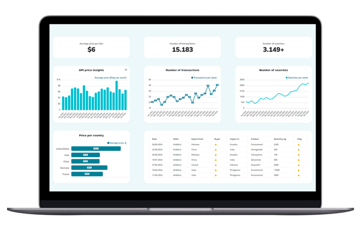
PRO Data Insights coverage for Apixaban: 1963 verified transactions across 629 suppliers and 305 buyers worldwide. Use the dataset to benchmark suppliers and monitor regulatory activity where available.
Where can I access the API market report for Apixaban?
Market report availability for Apixaban: Report Available. The report highlights demand trends, pricing drivers, and supplier landscape insights for procurement planning.